Eastern Front in Flames: The Forgotten Battlefield That Changed the World
When people remember the First World War, the images that usually come to mind are the trenches of France and Belgium, the battles of Verdun, the Somme, or the devastation of the Western Front.
However, far from those famous battlefields, another enormous conflict was unfolding across the vast territories of Eastern Europe.
The Eastern Front was one of the largest theaters of war in modern history. Unlike the relatively static trench warfare of the West, the fighting between Russia, Germany, and Austria-Hungary involved enormous movements of troops across thousands of kilometers of territory.
This front would not only determine military outcomes but also contribute directly to the collapse of one of Europe’s oldest empires.
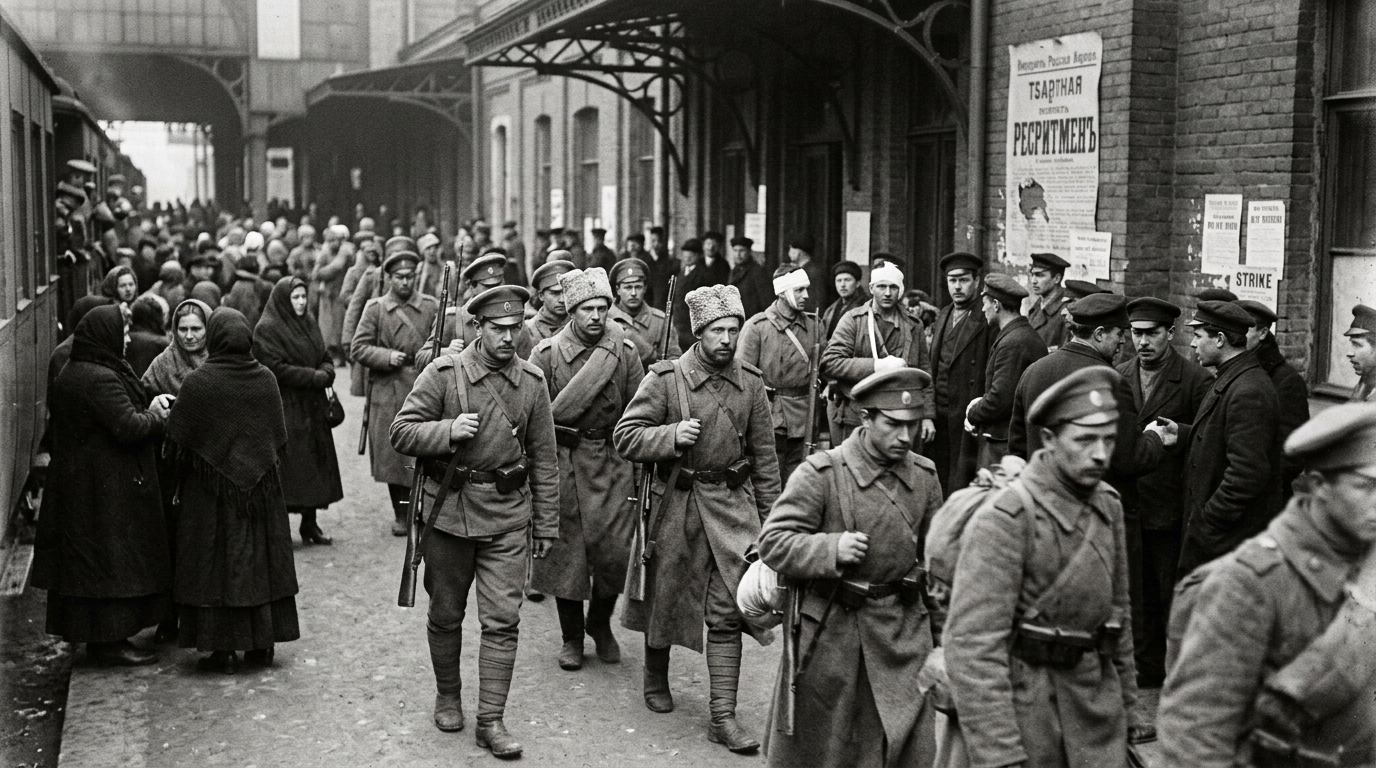
The Russian Empire entered the war with enormous manpower and ambitious strategic goals. Yet behind its impressive numbers existed serious weaknesses: outdated military organization, logistical problems, shortages of equipment, and political instability.
The defeats suffered by Russian forces between 1914 and 1917 damaged the prestige of Tsar Nicholas II and accelerated the social crisis that eventually destroyed the Russian monarchy.
The Eastern Front was therefore more than a battlefield.
It became the place where military failure transformed into political revolution.
The Franco-Russian Alliance: Preparing for a Two-Front War
In 1891, France and Russia signed a secret diplomatic agreement designed to counter the growing power of the German Empire.
This alliance was later officially strengthened and ratified in 1913, creating a formal mechanism of mutual defense between the two nations.
The purpose was clear:
If Germany mobilized its forces, both France and Russia would be obligated to respond with their own military mobilizations.
The strategic logic was simple:
Germany would be forced to divide its armies between two major fronts.
- France would pressure Germany from the west.
- Russia would threaten Germany from the east.
- Berlin would be unable to concentrate all its forces against a single enemy.
This strategy was designed as a deterrent against German expansion and as a way to prevent Germany from using its industrial and military strength against one opponent at a time.
The Scale of Allied Mobilization
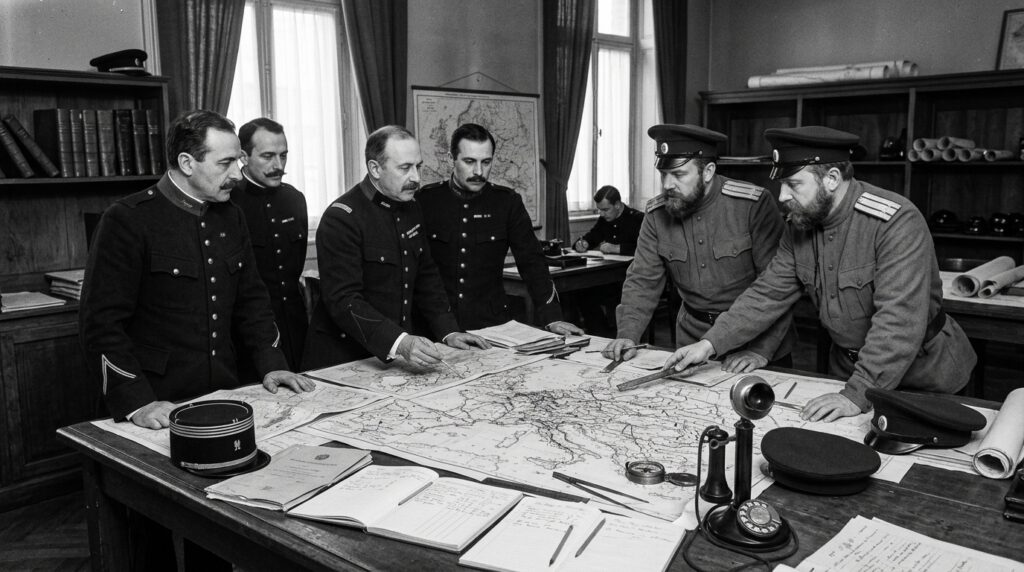
The alliance between France and Russia was not merely political.
It required enormous military commitments.
Before the war, both countries prepared plans for large-scale mobilization:
- France planned to mobilize approximately 1.3 million soldiers.
- Russia prepared to mobilize around 800,000 troops in the initial stages of the conflict.
These numbers demonstrated the importance of the alliance system that had developed before 1914.
European powers had created a network of obligations where a conflict between two nations could quickly involve entire continents.
The assassination of Archduke Franz Ferdinand in June 1914 activated this dangerous system.
When Austria-Hungary moved against Serbia and Germany supported Vienna, the alliance structure transformed a regional crisis into a global war.
Russia Enters the War: A Giant Army With Serious Weaknesses
When World War I began in 1914, Russia honored its commitment to France.
The Russian government understood that allowing Germany to defeat France without pressure from the East would create a dangerous situation.
Therefore, Russian commanders accelerated preparations and ordered troops toward German and Austro-Hungarian territories.
However, the speed of mobilization exposed major weaknesses within the Russian military system.
The empire possessed enormous manpower, but quantity did not automatically translate into military effectiveness.
Problems Inside the Russian Army
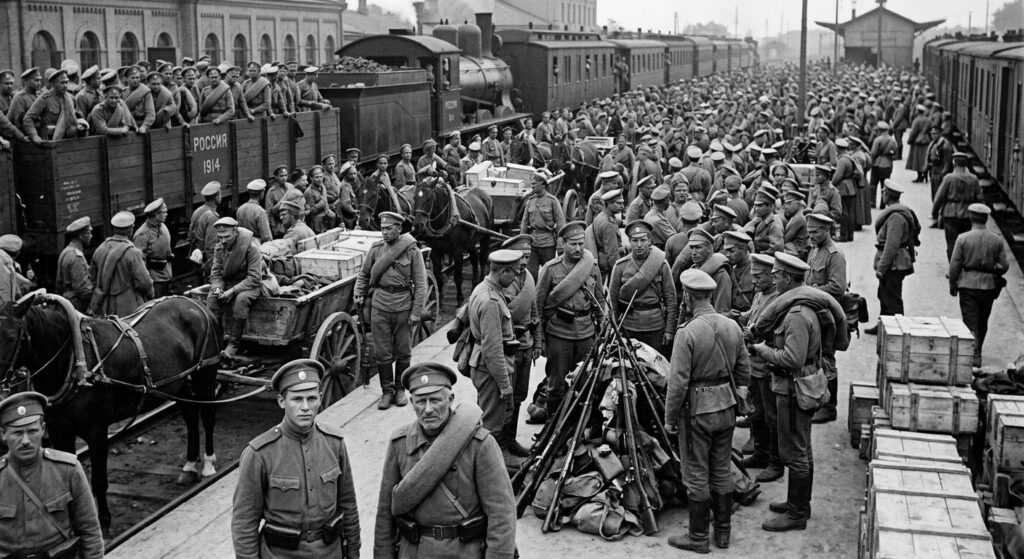
The Russian Army entered World War I with serious disadvantages compared with Germany.
Although it could field millions of soldiers, it suffered from:
- Poor coordination between military units.
- Limited modern equipment.
- Inadequate communication systems.
- Shortages of weapons and ammunition.
- Uneven training among soldiers.
- Weak logistical infrastructure.
Many Russian troops were sent into combat before they were fully prepared.
The result was devastating.
Thousands of soldiers entered battles against one of Europe’s most advanced military forces without the necessary preparation for industrial warfare.
The early defeats damaged confidence in the army and weakened public faith in the Tsarist government.
Russia Opens Two Fronts Against the Central Powers
While France fought Germany in the West, Russia attempted to pressure the Central Powers from the East.
Russian commander General Yakov Zhilinsky organized a two-direction offensive strategy.
The Russian Army was divided into two major groups:
- One force advanced south toward Austrian positions in Galicia.
- Another moved north toward East Prussia to confront Germany directly.
The objective was ambitious:
Russia hoped to force Germany and Austria-Hungary to divide their forces and prevent them from concentrating against a single enemy.
However, the execution of this strategy revealed the weaknesses of Russian command.
Poor coordination and rushed preparations created opportunities for German forces to respond effectively.
East Prussia and the Battle of Tannenberg
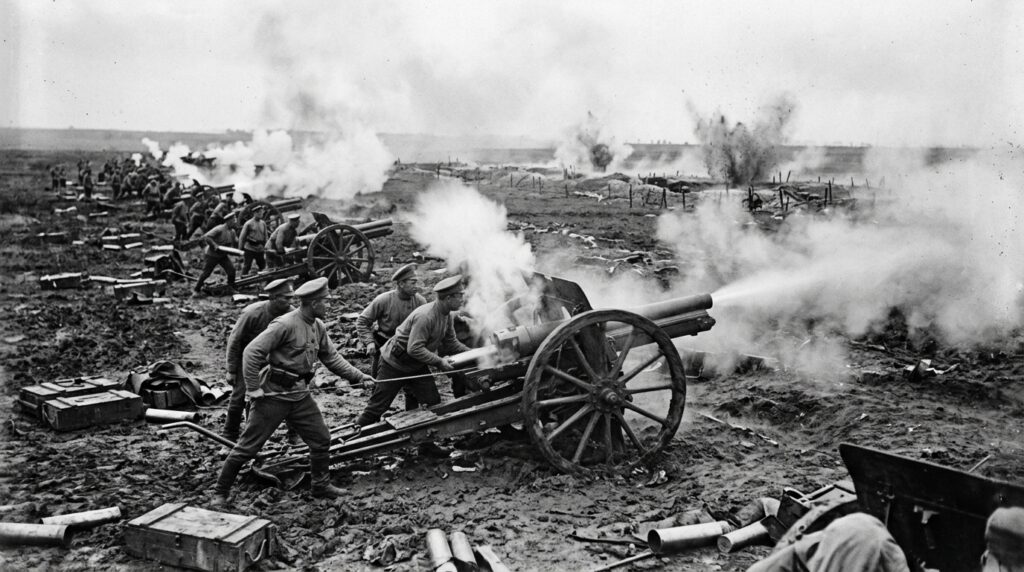
The first major confrontation between Russia and Germany occurred on August 17, 1914, north of the Masurian Lakes in East Prussia.
The region held enormous symbolic importance for Germany because it represented imperial territory directly threatened by Russian forces.
The German defense was commanded by General Maximilian von Prittwitz, leader of the German 8th Army in East Prussia.
At first, the Russian advance created serious concern among German commanders.
Prittwitz became increasingly overwhelmed by the pressure of the Russian offensive and feared that his forces might be forced into a disastrous retreat.
The German High Command quickly recognized the leadership problem.
Ludendorff and Hindenburg Take Command
The German military leadership reacted immediately.
General Erich Ludendorff was appointed to replace Prittwitz, working under the strategic direction of Field Marshal Helmuth von Moltke “the Younger.”
However, the figure who would soon become the symbol of Germany’s Eastern Front victories was Paul von Hindenburg.
Together, Hindenburg and Ludendorff reorganized German forces and prepared a counterattack designed to surround the advancing Russian army.
Their response transformed a dangerous defensive situation into one of Germany’s greatest victories of the war.
The Battle of Tannenberg: Germany’s Revenge
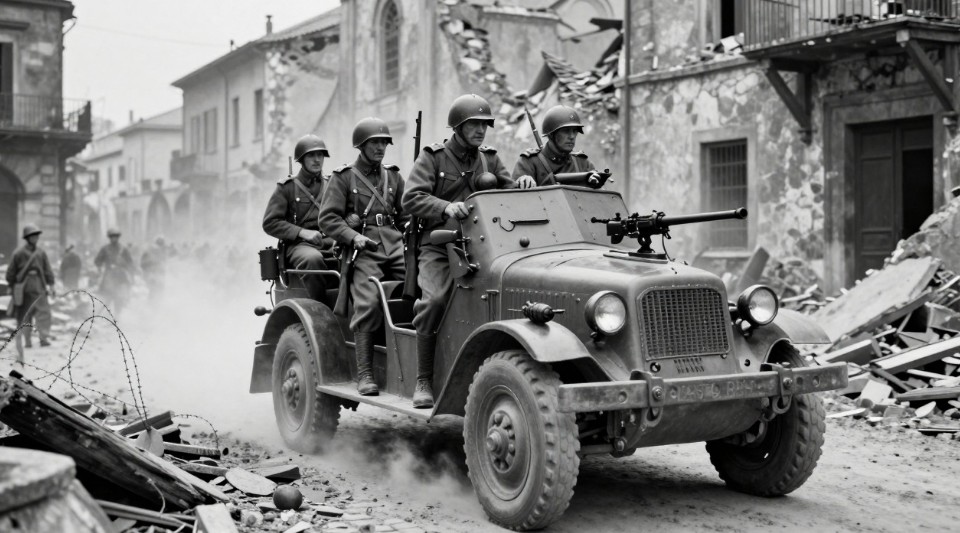
On August 28, 1914, German forces launched a decisive flanking maneuver against Russian troops.
Instead of simply defending their positions, German commanders used superior coordination and intelligence to surround the Russian army.
The result was catastrophic for Russia.
By August 31, the Russian force had collapsed.
The numbers revealed the scale of the defeat:
- 98,000 Russian soldiers were captured.
- 13 Russian generals were taken prisoner.
- 350 artillery pieces were lost.
The Russian commander General Alexander Samsonov, devastated by the destruction of his army, withdrew into a nearby forest.
Shortly afterward, overwhelmed by the scale of the defeat, he took his own life.
A Victory With Historical Symbolism
The Germans named the battle Tannenberg, deliberately connecting it to a medieval conflict.
The name referred to the 1410 Battle of Grunwald/Tannenberg, where Polish and Lithuanian forces defeated the Teutonic Knights.
By choosing this name, Germany transformed the modern victory into a powerful national symbol.
The message was clear:
A historical humiliation had supposedly been reversed.
The victory at Tannenberg became one of the greatest propaganda successes of the German Empire during World War I.