Introduction
On August 1, 1914, the world crossed a point of no return. What began as another tense day in Berlin, the capital of the German Empire, quickly evolved into one of the most decisive moments in modern history. Within hours, diplomatic negotiations gave way to military action, and Europe stood on the brink of a conflict that would eventually involve nations across the globe.
The First World War did not begin suddenly. It was the result of years of political rivalries, military planning, and international crises that had steadily eroded trust between Europe’s great powers. By the summer of 1914, governments had prepared detailed mobilization plans, powerful armies stood ready, and alliances meant that a conflict between a few countries could rapidly become a continental war.
August 1 marked the moment when those preparations became reality. Decisions made behind palace doors, military headquarters, and government offices would soon reshape the twentieth century forever.
Germany’s Final Preparations for War
Berlin Receives the Signal
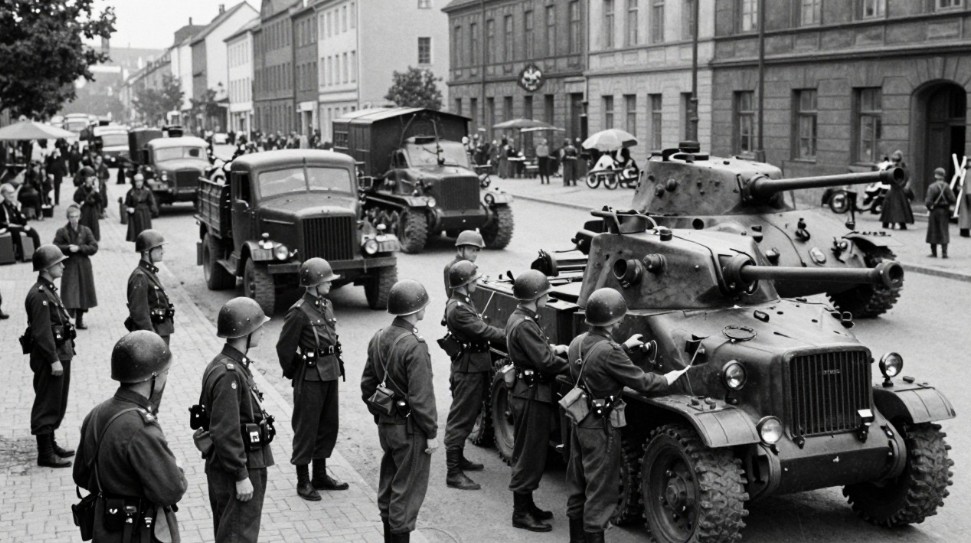
On that historic day, Emperor Wilhelm II received confirmation that Germany was fully prepared for military action. The country’s extensive mobilization plans had reached their final stage, leaving little room for diplomacy to reverse the course of events.
General Georg von Waldersee, responsible for overseeing German military forces, informed the German Foreign Minister that everything was in place. Troops had reached their assigned positions, transportation networks were functioning according to plan, and the German army was prepared to move as soon as political authorization was given.
Although diplomatic discussions—particularly between Germany and Great Britain—continued in the hope of preventing a wider conflict involving France, those negotiations were rapidly losing momentum.
Behind the scenes, military planning had already overtaken diplomacy.
Germany’s leadership believed that hesitation could prove more dangerous than immediate action, making rapid mobilization a strategic priority.
Why Speed Was Essential
German military planners understood that time would determine the outcome of any future conflict.
Their strategy depended on striking France before Russia could fully mobilize its enormous army in the east. If Germany could defeat France quickly, it hoped to redirect its forces against Russia before facing a prolonged two-front war.
This strategy relied on several critical factors:
- Rapid military mobilization.
- Efficient railway transportation.
- Surprise attacks against enemy positions.
- Fast movement toward French territory.
- Preventing France and Russia from coordinating their forces.
Every hour became increasingly valuable as Europe moved closer to open war.
The German Plan to Invade France
The Strategic Importance of Belgium
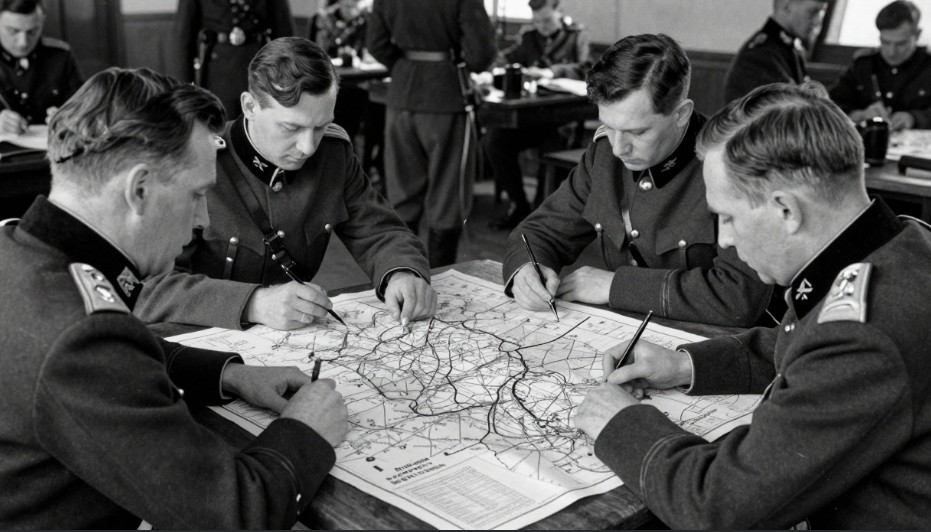
Germany’s military strategy required more than simply attacking France along their shared border.
German commanders planned to advance through Luxembourg and Belgium, using the region’s railway network and relatively open terrain to launch a faster offensive into northern France.
Military leaders believed this route would allow German forces to bypass heavily fortified French defenses and gain an early advantage.
From a purely strategic perspective, the plan offered several military benefits:
- Faster access to northern France.
- Better railway connections for troop movements.
- The possibility of surrounding French defensive positions.
- Greater operational flexibility during the opening weeks of the war.
However, the strategy carried enormous political consequences.
Violating Belgian Neutrality
Belgium had declared its neutrality decades earlier, and that status had been recognized by several European powers through international agreements.
Invading Belgian territory would therefore mean violating those treaties and risking the intervention of countries committed to defending Belgian independence.
German leaders nevertheless concluded that military necessity outweighed diplomatic concerns.
They believed that a rapid victory over France would offset any international criticism or political backlash.
In retrospect, many historians consider this decision one of Germany’s most consequential strategic mistakes. Rather than limiting the conflict, the invasion of Belgium widened it by drawing additional powers into the war.
At the time, however, German commanders viewed speed as the decisive factor and believed that delaying the offensive would place the entire campaign at risk.
France Prepares for War
The Legacy of the Franco-Prussian War
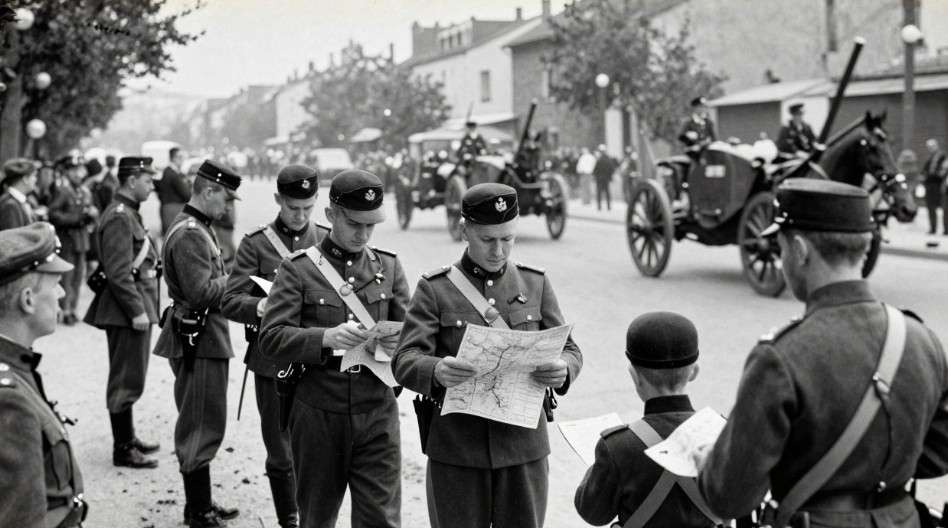
France followed Germany’s military preparations with growing concern. The memory of the Franco-Prussian War remained deeply rooted in French politics and military planning.
The humiliating defeat at the Battle of Sedan in 1870 had dramatically changed the balance of power in Europe. As part of the peace settlement, France was forced to surrender the strategically important regions of Alsace and Lorraine to the newly unified German Empire.
For more than four decades, these territories remained under German control, becoming powerful symbols of national humiliation and unfinished business for many French citizens and political leaders.
Recovering Alsace and Lorraine gradually became more than a territorial objective—it represented the restoration of French national prestige.
Joseph Joffre Calls for Immediate Mobilization
General Joseph Joffre, then serving as Chief of the General Staff, believed France could no longer delay its preparations.
He urged Minister of War Adolphe Messimy to authorize the immediate mobilization of French forces, arguing that Germany had already moved beyond diplomacy and into military execution.
Despite this urgency, one critical question remained unanswered.
France still needed to know whether Russia would honor its alliance and mobilize against Germany.
The German strategy was based on the Schlieffen Plan, a military blueprint developed years before the outbreak of the war by Field Marshal Alfred von Schlieffen. The plan envisioned defeating France in approximately six weeks through a rapid advance across Belgium before turning the bulk of Germany’s forces eastward to confront Russia, whose vast territory and slower mobilization were expected to delay its entry into full-scale combat. German planners believed that speed and coordination would be decisive, making the country’s extensive railway network one of its greatest strategic advantages during the opening days of the conflict.
Germany’s confidence was supported by its remarkable industrial and military growth during the late nineteenth and early twentieth centuries. By 1914, the German Empire had become one of Europe’s leading industrial powers, producing enormous quantities of steel, coal, machinery, and military equipment. Its railway system stretched for more than 60,000 kilometers, allowing troops, artillery, horses, and supplies to be transported with remarkable efficiency. Within the first weeks of mobilization, Germany would call up more than 3.8 million soldiers, demonstrating the scale of its military preparation and its ability to convert industrial strength into battlefield readiness.
Despite these impressive capabilities, German leaders underestimated both the diplomatic consequences and the military resistance their strategy would provoke. The invasion of neutral Belgium shocked international opinion and strengthened support for intervention among countries that had hoped to remain outside the conflict. Instead of isolating France and achieving a swift victory, Germany’s decision contributed to transforming what many expected to be a short European war into a prolonged international conflict involving multiple fronts, millions of soldiers, and unprecedented levels of destruction.