The Forgotten Italian Volunteers of World War I
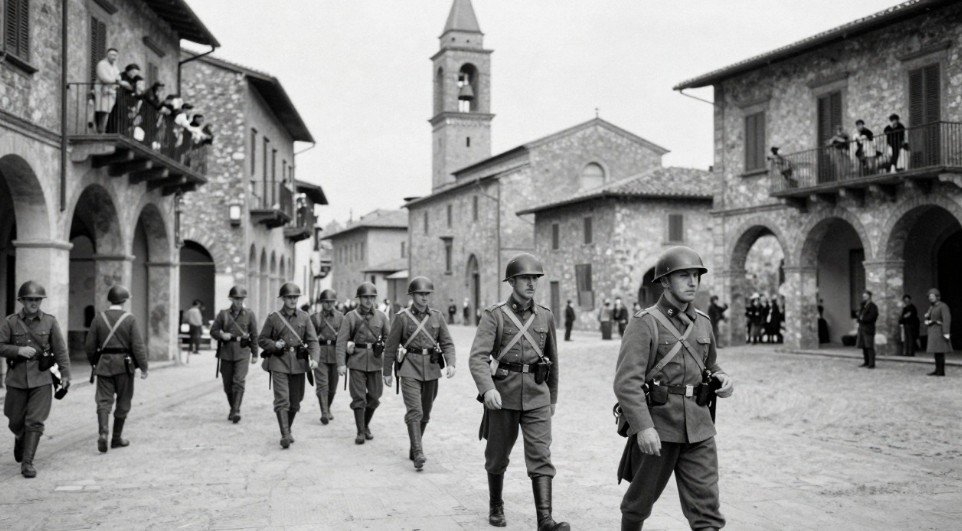
When the First World War began in 1914, Europe entered a conflict unlike anything the world had experienced before. Millions of soldiers would eventually fight across multiple fronts, and entire nations would be transformed by the consequences of industrial warfare.
At the center of this global crisis was a complex network of alliances. The Triple Entente, formed by France, the United Kingdom, and Russia, confronted the Triple Alliance, composed of Germany, Austria-Hungary, and Italy.
However, one important detail often overlooked is that Italy did not immediately enter the war.
Although Italy was officially part of the Triple Alliance, the Italian government declared neutrality when hostilities began. This decision was influenced by diplomatic calculations, internal political divisions, and unresolved territorial disputes with Austria-Hungary.
Yet while the Italian government remained cautious, many Italians viewed the conflict through a different perspective. For them, the war represented a struggle between national independence, republican ideals, and resistance against imperial ambitions.
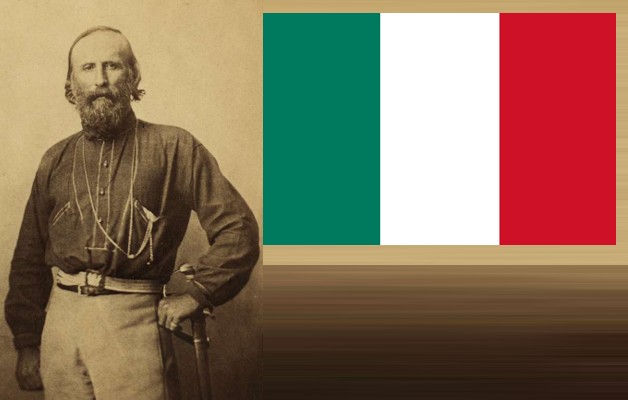
Among those who chose action instead of waiting for political decisions was Peppino Garibaldi, grandson of Giuseppe Garibaldi, one of the most celebrated figures of Italian unification.
Italy’s Neutrality and the Call to Fight for France
The Weight of the Garibaldi Legacy
The name Garibaldi carried enormous symbolic importance in Italy.
Giuseppe Garibaldi had become a national hero during the nineteenth century for his role in the Risorgimento, the movement that led to the unification of Italy. Known for his military campaigns and republican ideals, Garibaldi represented concepts such as freedom, independence, and popular resistance.
His descendants inherited not only his family name but also the political and patriotic traditions associated with it.
Peppino Garibaldi grew up surrounded by this legacy. Influenced by his family’s history and republican beliefs, he viewed the German expansion in Europe as a threat to the values that his grandfather had defended decades earlier.
For Peppino and many Italian volunteers, supporting France was not simply a military decision. It was seen as a continuation of the fight for liberty.
The Creation of the Garibaldi Regiment
On November 5, 1914, while Italy was still officially neutral, a foreign volunteer unit was created in France.
This formation became known as the Garibaldi Regiment, a name chosen as a direct tribute to the famous Italian family.
The unit was composed of international volunteers, including many Italians who wanted to fight alongside France.
A total of 2,169 men enlisted in the regiment.
These volunteers were motivated by several factors:
- The political ideals associated with Giuseppe Garibaldi.
- Support for France and the republican tradition.
- Opposition to German expansionism.
- A desire to defend national independence and freedom.
- Personal loyalty to the Garibaldi family legacy.
The creation of the regiment had a significance that went beyond the battlefield.
Although Italy’s government remained neutral, the existence of thousands of Italian volunteers fighting for France demonstrated that a portion of Italian society had already chosen a side.
The Garibaldi Regiment became a symbolic declaration that political neutrality did not necessarily represent the feelings of an entire population.
The Baptism of Fire: The Garibaldians Enter Combat
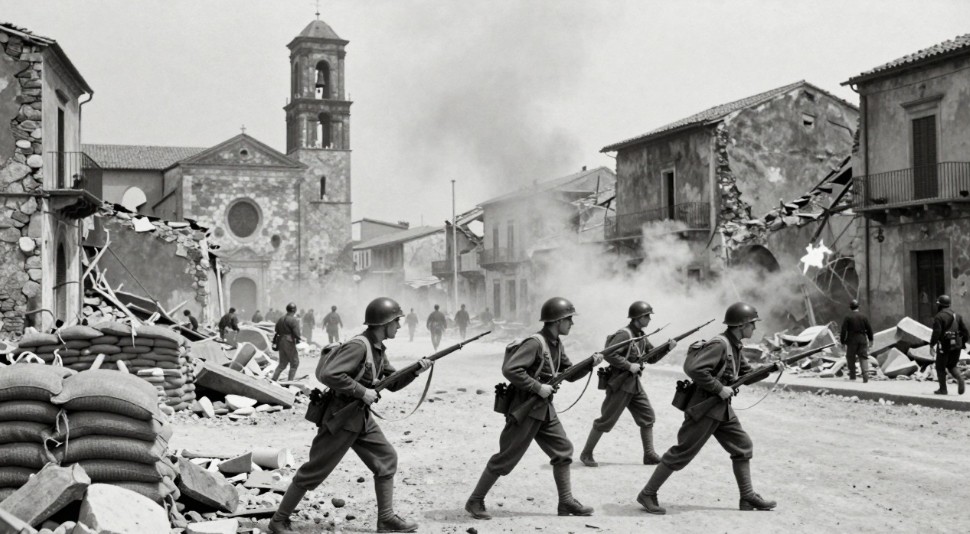
The Garibaldi Regiment was formed quickly and had limited time for preparation before being sent into combat.
By late 1914, the unit was deployed to the Lorraine region, an area that had enormous historical importance due to the rivalry between France and Germany.
Lorraine, together with Alsace, had been transferred to Germany after the Franco-Prussian War of 1870–1871. For France, recovering these territories remained a powerful national aspiration.
The region also held major strategic importance because it represented one of the main areas where French and German forces confronted each other.
The mission assigned to the Garibaldi Regiment was extremely difficult:
- Attack German defensive positions.
- Support French operations.
- Hold strategic areas under enemy pressure.
- Demonstrate the combat value of the volunteer unit.
The Italian volunteers faced a battlefield dominated by artillery, fortified positions, and close combat.
Courage Under Fire
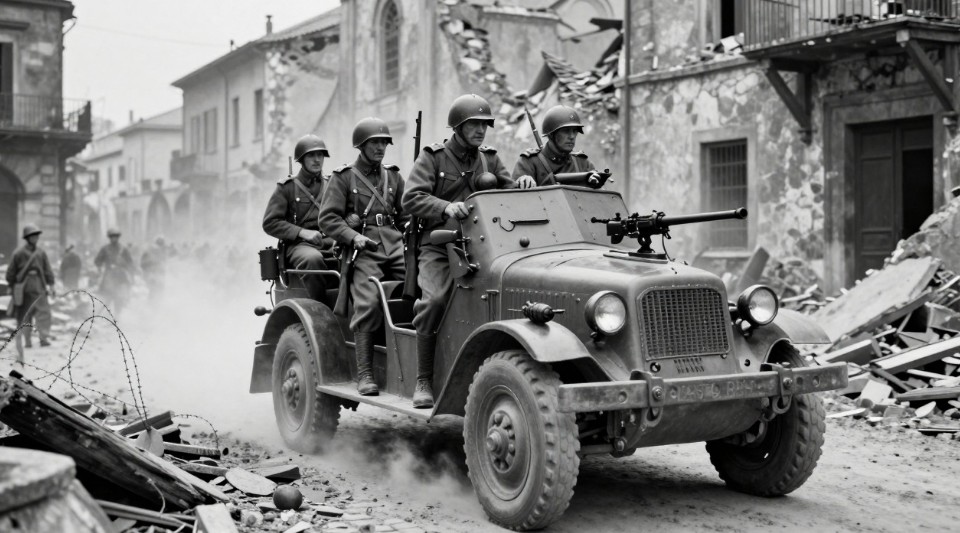
The fighting in Lorraine tested the determination of the Garibaldians.
The volunteers entered combat against experienced German forces positioned behind defensive lines. The battle conditions reflected the reality of early World War I:
- Heavy artillery bombardments.
- Mud-filled battlefields.
- Close-range infantry attacks.
- Constant danger from enemy fire.
Despite suffering significant losses, the Garibaldi Regiment achieved its objective and gained recognition for its performance.
Their actions quickly attracted attention beyond France.
In Italy, the event became a symbol of patriotic commitment, showing that many Italians were already participating in the conflict despite their nation’s official neutrality.
Recognition in Italy and France
The Corriere della Sera Celebrates the Garibaldians
News of the regiment’s actions spread quickly.
One of Italy’s most influential newspapers at the time, Corriere della Sera, highlighted the courage of the Garibaldi Regiment.
The story captured public attention because it represented a powerful contradiction:
Italy was officially neutral, yet Italian volunteers were fighting on French soil.
The image of Italian soldiers fighting in the trenches of Lorraine became a symbol of sacrifice, courage, and political conviction.
For many supporters of intervention, the Garibaldians represented the idea that Italy’s future should be connected to the Allied powers.
Bruno Garibaldi: A Symbol of Franco-Italian Unity
The French public also responded strongly to the actions of the regiment.
One of the most emotional moments came with the death of Bruno Garibaldi, Peppino’s brother, who was killed during combat.
French newspapers, including Le Petit Parisien, paid tribute to Bruno and presented him as a symbol of the connection between France and the Garibaldi family.
His death transformed him into a martyr figure for supporters of the Allied cause.
For many French citizens, Bruno Garibaldi represented a historical bridge between:
- The ideals of the French Republic.
- The Italian struggle for national unity.
- The shared belief in defending freedom against authoritarian expansion.
His sacrifice strengthened the emotional bond between Italian volunteers and the French population.
The End of the Garibaldi Regiment
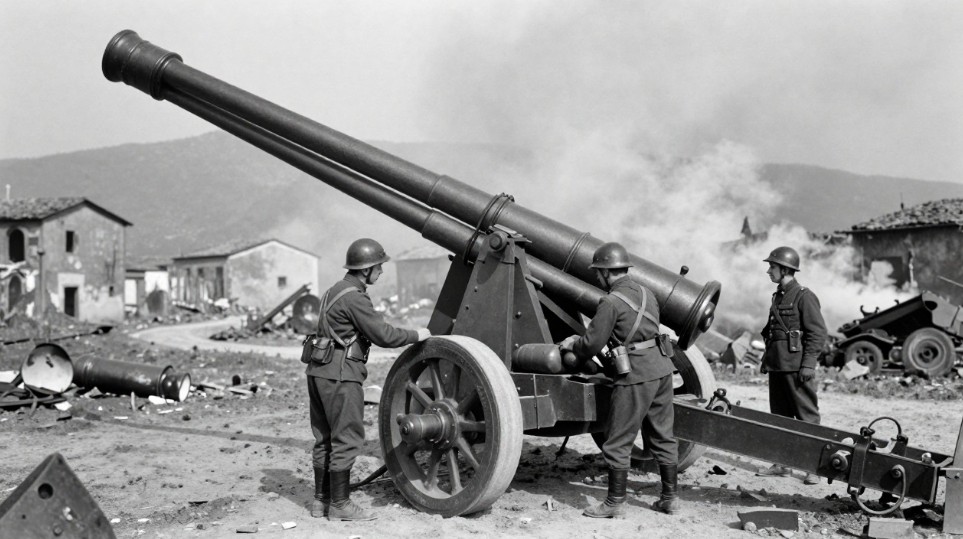
Despite its symbolic importance and its successful performance on the battlefield, the Garibaldi Regiment existed for only a short period of time.
On March 5, 1915, approximately four months after its creation, the unit was officially dissolved.
However, this was not considered a defeat or a failure. Instead, the dissolution reflected the rapidly changing political situation in Europe.
Italy was moving closer to abandoning neutrality and entering the war officially. The volunteers of the Garibaldi Regiment had already demonstrated that a significant portion of Italian society supported intervention against Germany and Austria-Hungary.
The regiment’s existence had served an important purpose:
- It demonstrated Italian support for the Allied cause before government intervention.
- It strengthened public sympathy toward France.
- It created a network of experienced volunteers who would later contribute to Italy’s military effort.
- It transformed the Garibaldi name into a symbol of resistance and sacrifice during the war.
The battlefield experience of those 2,169 men became a preview of Italy’s larger involvement in the conflict.
Italy Changes Sides: From Neutrality to War
The Treaty of London and Territorial Promises
After months of diplomatic negotiations, Italy officially changed its position in 1915.
The decision was influenced by promises from the Allied powers regarding territorial gains after a possible victory.
Among the territories promised to Italy were:
- Trentino.
- South Tyrol.
- Parts of Dalmatia.
- Other strategic areas controlled by Austria-Hungary.
These regions had been central to Italian nationalist ambitions for decades. Many Italian politicians argued that completing national unification required incorporating territories with Italian-speaking populations.
On May 23, 1915, Italy formally declared war on Austria-Hungary, entering the conflict on the side of the Allies.
The former neutrality of Italy was replaced by active participation in one of the largest wars in history.
Many former members of the Garibaldi Regiment were absorbed into the Italian Army or continued their military service alongside French forces.
The spirit that created the Garibaldians did not disappear with the end of the unit. Instead, it became part of Italy’s broader wartime identity.
Fire in the Alps: Italy’s War Against Austria-Hungary
A New Battlefield in the Mountains
Italy’s main military challenge was not the Western Front but the difficult Alpine frontier against Austria-Hungary.
The Italian Front became one of the most extreme environments of World War I.
Unlike the open plains of France and Belgium, the Alps created a battlefield where nature itself became an enemy.
Italian and Austro-Hungarian soldiers fought at extraordinary altitudes, often above 2,000 meters, where temperatures could drop dramatically and weather conditions could change within hours.
The soldiers faced:
- Freezing temperatures.
- Avalanches.
- Mountain collapses.
- Difficult supply routes.
- Limited mobility.
- Constant exposure to enemy fire.
Battles were fought not only between armies but also against the environment.
The Challenges of Alpine Warfare
Italian commanders, including figures such as General Andrea Di Robilant, faced the enormous difficulty of moving troops and equipment through mountainous terrain.
Artillery had to be transported through narrow paths and steep slopes. Supplies often depended on difficult logistical operations, while soldiers lived in positions carved directly into rock and ice.
In many cases, death came not only from enemy weapons but from the mountains themselves.
Avalanches could bury entire groups of soldiers. Extreme cold could become as deadly as artillery fire.
The Alpine Front demonstrated one of the harshest realities of World War I: modern warfare was not limited to technological destruction. Geography, climate, and endurance were equally decisive factors.
Italian Soldiers on the Western Front
Supporting France and Britain
Although Italy’s main military effort remained focused against Austria-Hungary, Italian troops also contributed to operations on the Western Front.
Their presence in France represented a continuation of the connection created by the Garibaldi Regiment.
Italian units were sent to support French and British forces during critical moments of the war.
One of the most important examples occurred in the Champagne region, where Italian soldiers participated in the defense against German offensives.
They fought alongside Allied troops during the Second Battle of the Marne, which took place between July and August 1918.
This battle became one of the turning points of the First World War.
The German offensive represented one of the final attempts to achieve victory before Allied strength became overwhelming.
The Allied resistance at the Marne stopped the German advance and marked the beginning of a major German retreat.
The Hills of Reims and Italian Sacrifice
The region around Reims became a symbol of Allied resistance.
Among the soldiers defending this area were Italian troops who fought alongside their French allies under extremely difficult conditions.
For these men, the battlefield represented more than a military mission.
It represented the continuation of the ideals that had motivated the original Garibaldi volunteers in 1914:
- Solidarity between nations.
- Defense of independence.
- Resistance against expansionist powers.
- Loyalty to allied nations.
The sacrifice of Italian soldiers on French soil connected the early volunteer movement with Italy’s official participation in the war.
Bligny: The Storm of June 1918
The German Assault of June 23
One of the most difficult moments for Italian troops on the Western Front occurred on June 23, 1918, near Bligny, in the Champagne region close to Reims.
The Italians were positioned in a strategically important defensive sector when German forces launched a powerful attack.
The offensive combined several elements of modern warfare:
- Heavy artillery bombardment.
- Poison gas attacks.
- Large infantry assaults.
- Continuous pressure against defensive positions.
The battlefield became a scene of destruction.
Trenches were destroyed by shellfire, soldiers fought while wearing gas masks, and the terrain was transformed into a mixture of mud, smoke, and debris.
Holding the Line at Bligny
Despite facing a powerful enemy offensive and suffering heavy casualties, Italian soldiers refused to abandon their positions.
Outnumbered and under constant attack, they maintained their defensive line long enough for French reinforcements to arrive.
The battle became a symbol of Italian sacrifice and determination during the final year of the war.
Many soldiers died at Bligny, but their resistance contributed to the wider Allied effort during the final months of the conflict.
The site later became a place of remembrance, representing the contribution of Italian troops to the defense of France.
A Forgotten Legacy That Deserves to Be Remembered
The story of the Garibaldi Regiment and Italy’s involvement in World War I remains relatively unknown outside specialized historical studies.
Yet it represents one of the most fascinating examples of how individuals and ideals could influence the course of history.
The story connects generations:
- Giuseppe Garibaldi’s nineteenth-century struggle for Italian unity.
- Peppino Garibaldi’s volunteer movement in 1914.
- Italy’s official entry into World War I.
- The sacrifices of Italian soldiers across Europe.
The 2,169 volunteers of the Garibaldi Regiment did not fight because they were ordered to do so by their government.
They fought because of personal conviction.
They believed they were defending principles larger than themselves.
The Meaning of the Garibaldi Legacy
The actions of Peppino and Bruno Garibaldi transformed a family name into a symbol of international solidarity.
Their story demonstrates how historical memory can influence political choices and inspire people during moments of crisis.
The Garibaldians fought in Lorraine, Champagne, Reims, and Bligny, leaving behind a legacy built on courage and sacrifice.
More than a century later, their story remains a reminder that history is not shaped only by governments and generals.
It is also shaped by individuals who make difficult choices during uncertain times.
The Italian volunteers who marched to France before Italy officially entered the war created a chapter of World War I history defined not only by battles, but by ideals, loyalty, and human courage.
Remembering them is not only a tribute to soldiers who fought and died, but also to the countless individuals whose decisions helped shape the course of the twentieth century.