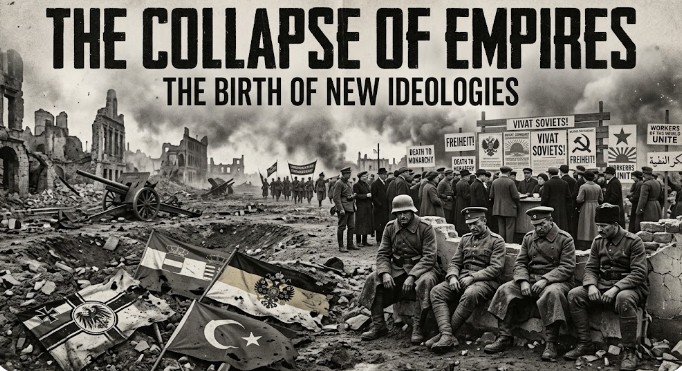
Introduction: The War That Ended an Era
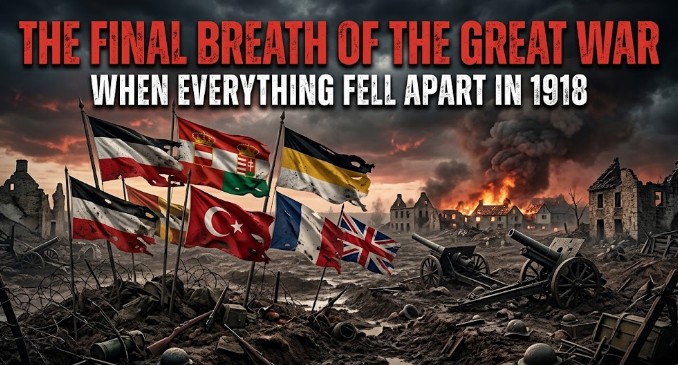
World War I was far more than a military conflict between European nations.
The war that began in 1914 represented the collapse of an entire historical order that had dominated Europe for centuries.
Before the conflict, the continent was controlled by powerful empires:
- German Empire.
- Austro-Hungarian Empire.
- Ottoman Empire.
- Russian Empire.
- British and French colonial empires.
These powers represented an old world based on monarchies, colonial expansion, and imperial competition.
But after four years of industrial warfare, millions of deaths, and economic destruction, that world would never return.
The trenches of Europe did not only destroy armies.
They destroyed political systems and created the conditions for new ideologies that would define the 20th century.
The United States Breaks From Isolation
The End of the Monroe Doctrine
For almost a century, the United States followed a policy of avoiding major European conflicts.
This approach was connected to the:
Monroe Doctrine — 1823
The principle was simple:
- Europe should avoid interfering in the Americas.
- The United States would avoid becoming involved in European power struggles.
For decades, this policy shaped American foreign relations.
However, World War I changed the situation completely.
Woodrow Wilson and America’s New Role
From Neutrality to Global Influence
When President:
Woodrow Wilson
entered the conflict in 1917, the United States abandoned its traditional distance from European wars.
Wilson believed American intervention could create a new international system.
His objectives included:
- Defeating German militarism.
- Creating a more democratic world order.
- Preventing future large-scale wars.
- Establishing a new form of international cooperation.
The arrival of American forces dramatically changed the balance of power.
More than:
2 million American soldiers
were eventually sent to Europe.
The United States entered the war as a relatively distant observer and ended it as one of the most influential nations on Earth.
The War That Destroyed Europe
The Human and Material Cost
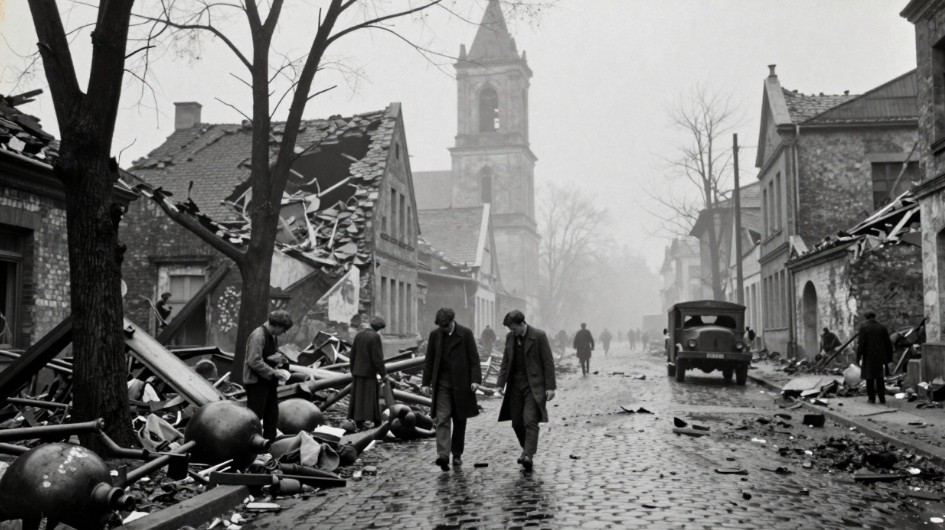
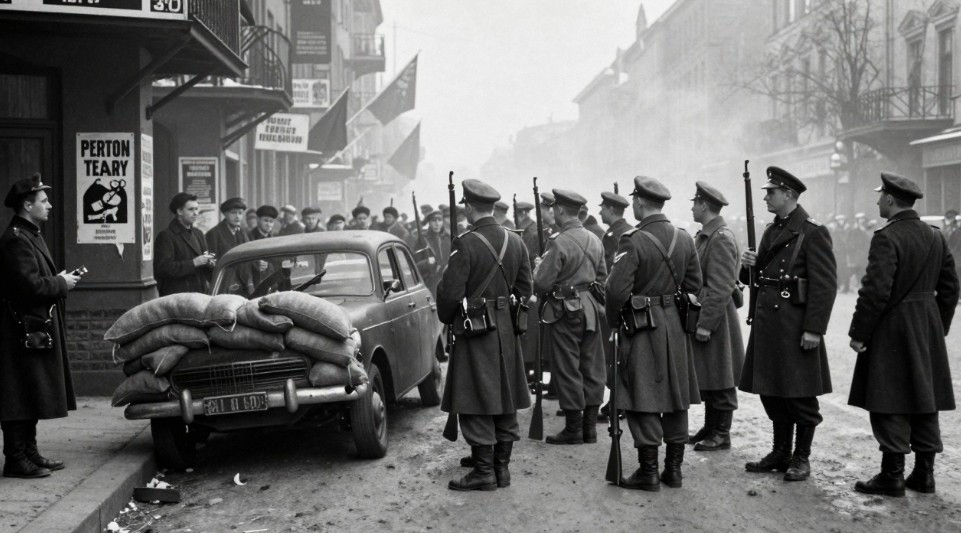
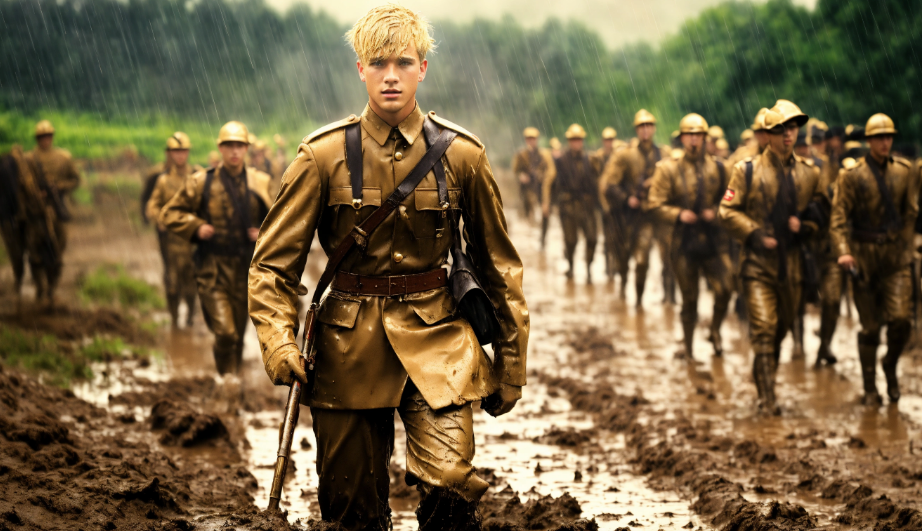
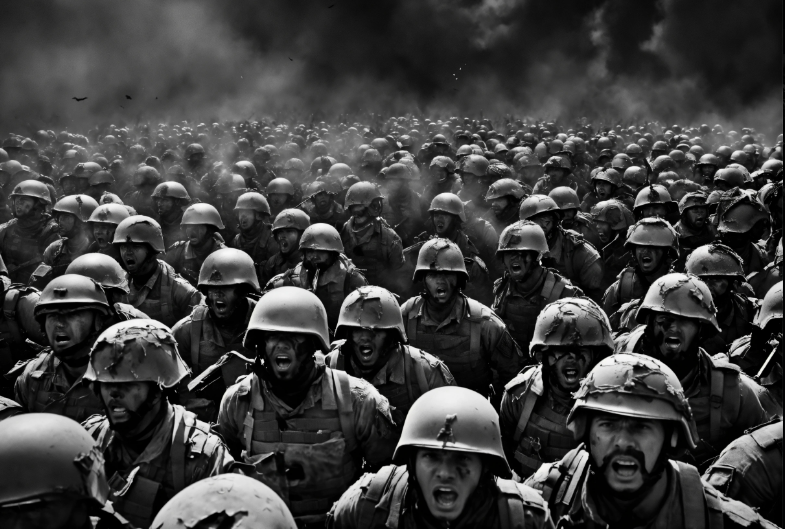
Between 1914 and 1918, Europe experienced destruction on a scale never seen before.
Industrial warfare introduced new levels of violence:
- Machine guns.
- Heavy artillery.
- Chemical weapons.
- Tanks.
- Aircraft.
Cities, villages, and entire regions were devastated.
Millions of soldiers became casualties, while civilian populations faced:
- Hunger.
- Economic collapse.
- Political instability.
- Social unrest.
The war weakened the old European powers and opened space for revolutionary movements.
Russia: The Birth of a Revolutionary Power
Military Defeat and Internal Collapse
While the Western Front consumed armies in France and Belgium, Russia faced a different disaster.
The Russian Empire entered the war with enormous manpower but suffered from:
- Poor military organization.
- Weak industrial capacity.
- Supply problems.
- Massive casualties.
By 1917, public confidence in Tsar:
Nicholas II
had collapsed.
The country faced:
- Food shortages.
- Strikes.
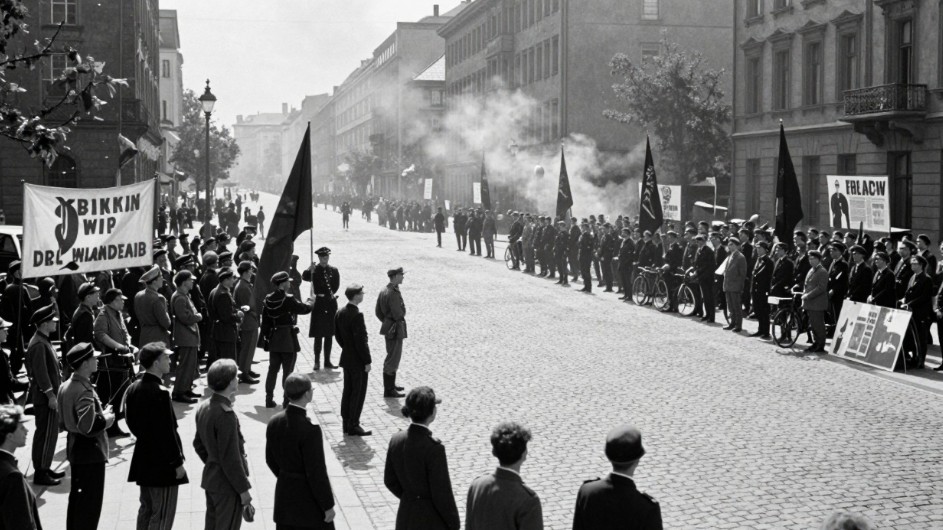
- Political protests.
- Military rebellion.
The monarchy could no longer maintain control.
The Russian Revolution of 1917
The Fall of the Tsar
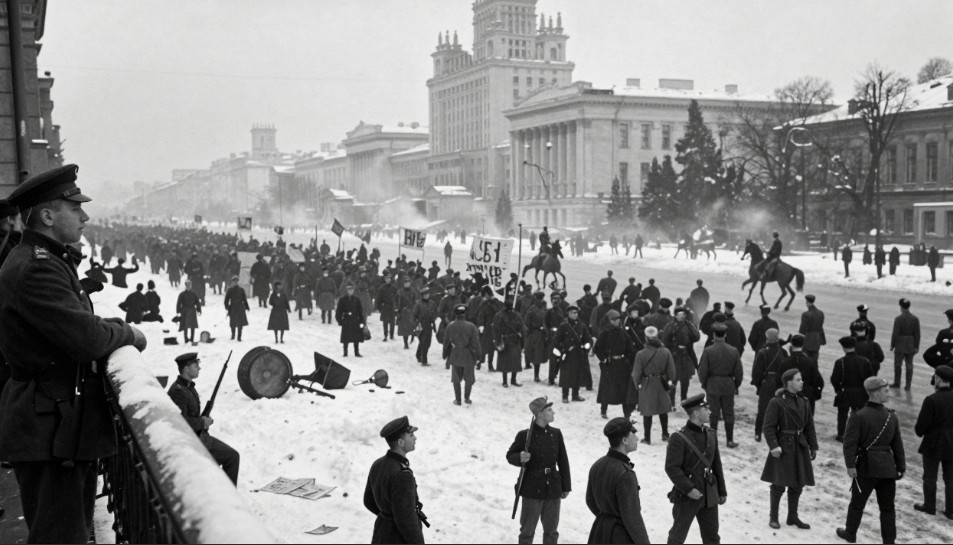
In 1917, revolution changed Russia forever.
The Tsar was removed from power, and later the Bolsheviks, led by:
Vladimir Lenin
seized control of the government.
Their goal was not simply to replace the monarchy.
They wanted to create a completely new political and economic system based on communist ideology.
The Bolshevik victory represented one of the most important turning points of modern history.
From Revolution to the Soviet Union
The Rise of a New Global Power
After taking power, Lenin’s government began transforming Russia.
The country eventually became:
The Union of Soviet Socialist Republics (USSR)
created in:
1922
The Soviet Union would later expand its influence across Eastern Europe and become one of the two dominant powers of the 20th century.
The Russian Revolution created a new ideological conflict:
- Capitalism versus communism.
- Democracy versus revolutionary socialism.
- Western powers versus Soviet influence.
The roots of the future Cold War had already been planted.
Germany After Defeat
The Fall of the German Empire
Germany entered World War I as one of Europe’s strongest military powers.
But by 1918, the situation had completely changed.
The country faced:
- Military defeat.
- Economic crisis.
- Food shortages.
- Political rebellion.
The German monarchy collapsed.
Kaiser:
Wilhelm II
abdicated in November 1918.
The old Prussian-led imperial system disappeared.
In its place emerged:
The Weimar Republic
The Fragile Birth of German Democracy
A Republic Built on Crisis
The Weimar Republic represented a major political transformation.
Germany moved from monarchy to democracy.
However, the new government immediately faced enormous challenges:
- Public anger over defeat.
- Economic instability.
- Political violence.
- Resentment toward the Treaty of Versailles.
Many Germans blamed the new republic for the consequences of the war.
This weakness would later create opportunities for extremist movements.