
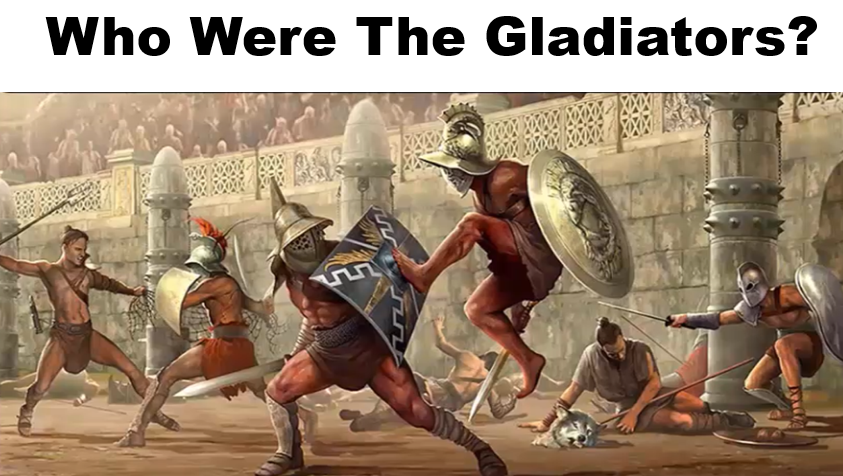
Beyond the Arena: The Dark Truths and Deadly Elegance of Ancient Rome’s Gladiators
The roar of 50,000 voices echoes through the stone corridors of the Colosseum, a sound so thunderous it vibrates in the very marrow of those waiting in the shadows. We often envision Roman gladiators through the lens of Hollywood—shining armor and heroic speeches—but the reality was far more complex, brutal, and strategically calculated. These were not just fighters; they were the “Bloody Heroes” of a civilization that viewed death as the ultimate spectator sport. In this deep dive, we peel back the crimson curtain to explore the lives, the specialized combat styles, and the surprising political machinery behind the world’s most dangerous profession.
The Human Cost of Empire: Who Truly Were the Gladiators?
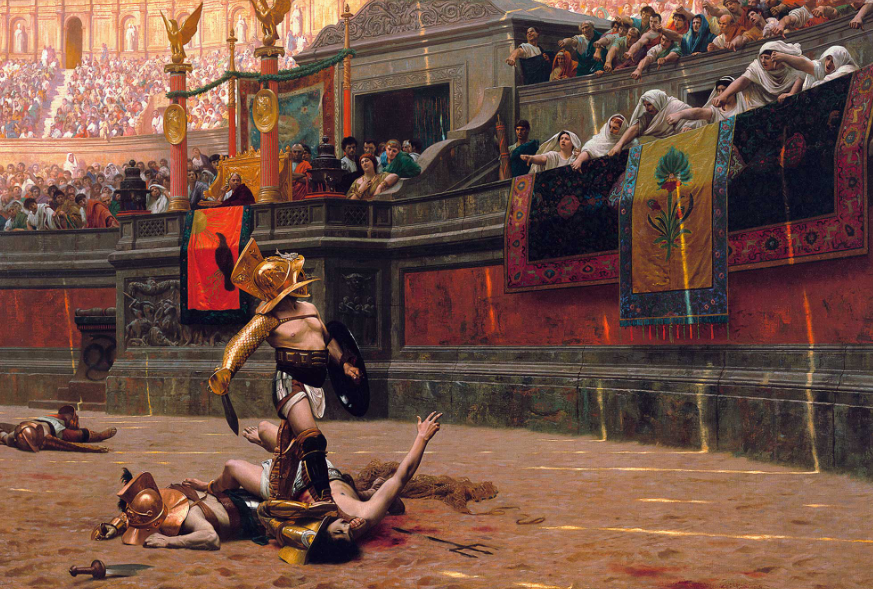
While modern sports stars choose their careers for fame and fortune, the vast majority of Roman gladiators were fueled by necessity or force. Primarily comprised of prisoners of war, convicted criminals (damnati), and desperate slaves, these men were the literal property of the Roman state or private entrepreneurs. However, history reveals a fascinating nuance: as the spectacle’s popularity grew, even free-born Romans—driven by crippling debt or an insatiable thirst for glory—voluntarily signed away their freedom to join the ludi (gladiator schools).
These warriors represented a paradox in Roman society. They were infamis—social outcasts with the same legal status as pimps and actors—yet they were the heartthrobs of the Empire. This “Bread and Circuses” (panem et circenses) strategy was the ultimate tool of social engineering. By providing free food and violent entertainment, Emperors could pacify a restless, impoverished populace, effectively drowning out political dissent with the clash of steel.
The Science of Slaughter: Training, Diet, and the “Barley Men”
To the untrained eye, a gladiatorial match might look like a chaotic brawl. In reality, it was a highly technical display of martial arts. Training was conducted at prestigious schools like the Ludus Magnus in Rome, under the watchful eye of doctores—retired gladiators who had survived their term of service. Life in these schools was disciplined and rigorous, focusing on specific weapon mastery and the psychological endurance required to face death without flinching.
The Surprising “Gladiator Diet”
Interestingly, forensic analysis of gladiator remains suggests a diet that would surprise modern athletes. Known as hordearii or “Barley Men,” gladiators consumed a diet incredibly high in carbohydrates—mostly barley and beans. This wasn’t because they were poor; it was a strategic choice. A layer of subcutaneous fat provided a “protective shield” against shallow cuts, allowing the fighter to continue bleeding and fighting for the crowd’s delight without suffering immediate damage to vital organs or nerves.
Masters of the Blade: Understanding the Specialized Classes
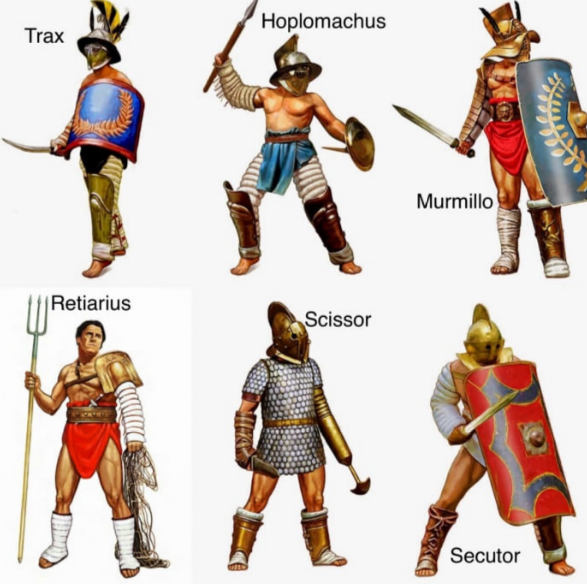
The Roman audience was sophisticated; they didn’t just want a fight, they wanted a balanced tactical puzzle. Gladiators were categorized into specific classes, each designed with unique strengths and weaknesses to ensure the most dramatic engagement possible.
1. The Thraex (The Thracian)
Often mistaken for the “Traqueus,” the Thraex was a crowd favorite modeled after warriors from Thrace. Armed with a sica (a curved short sword) and a small, rectangular shield called a parmula, they were designed for agility. Their curved blade was particularly lethal, capable of reaching around an opponent’s shield to strike the back or sides.
2. The Murmillo (The Fish Man)
Replacing the “Mamilos,” the Murmillo was the “tank” of the arena. Carrying a massive rectangular shield (scutum) and the iconic Roman gladius, they were heavily armored and slow. Their helmet featured a prominent crest shaped like a fish, which is where their name originated. They were the ultimate test of endurance for any opponent.
3. The Retiarius (The Net-Fighter)
The Retiarius was perhaps the most distinct. Unprotected by a helmet or shield, he relied entirely on speed. Armed with a weighted net, a three-pronged trident, and a long dagger, he fought a “cat and mouse” game. His goal was to entangle the more heavily armored Secutor—a gladiator specially designed with a smooth, round helmet to avoid getting caught in the net.
Faith in the Fire: Christians and the Arena
As the Roman Empire expanded, so did its intolerance for those who refused to acknowledge the divinity of the Emperor. During the Great Persecutions, the arena took on a more sinister role as a place of execution. Christians were often cast as noxii (meritless criminals), forced into the arena not to fight, but to be “fed to the beasts” (damnatio ad bestias). These public executions were intended to demonstrate the absolute power of Rome over this “subversive” new faith, yet the courage shown by martyrs in their final moments often had the opposite effect, drawing curious Romans toward Christianity.
The End of an Era: Why the Games Fell
All empires eventually change their heart. By the 4th century AD, the rise of Christianity as the state religion led to a moral shift. Figures like Saint Telemachus, who reportedly stepped into the arena to stop a fight and was stoned by the crowd, became symbols of the growing opposition to blood sports. In 404 AD, Emperor Honorius officially abolished the gladiator games, citing their incompatibility with Christian values and the mounting financial strain of maintaining such lavish, lethal spectacles.
Conclusion: The Eternal Legacy of the Gladiator
The gladiator remains an enduring symbol of the human spirit’s resilience under the most oppressive conditions. They were the ultimate performers, turning a death sentence into a display of art and bravery. While the sands of the Colosseum have long since dried, the archetype of the gladiator—the lone warrior fighting against the odds—continues to inspire our stories, our films, and our understanding of Ancient Rome’s complex soul.