
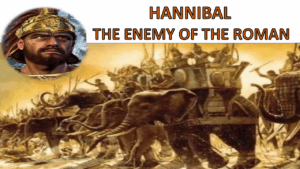
Hannibal Barca: The Strategic Genius Who Brought Rome to the Brink of Ruin
Before Rome ascended as the undisputed superpower of the ancient world, it faced a nightmare that nearly erased its name from history. Hannibal Barca was more than just a Carthaginian general; he was a tactical visionary whose vengeful campaign across the Alps remains one of the most audacious military feats in human history.
In this deep dive, we explore how one man, driven by a childhood oath and unmatched brilliance, outsmarted the Roman legions for over a decade and changed the art of war forever.
🏛️ Who Was Hannibal Barca? The Man Behind the Legend
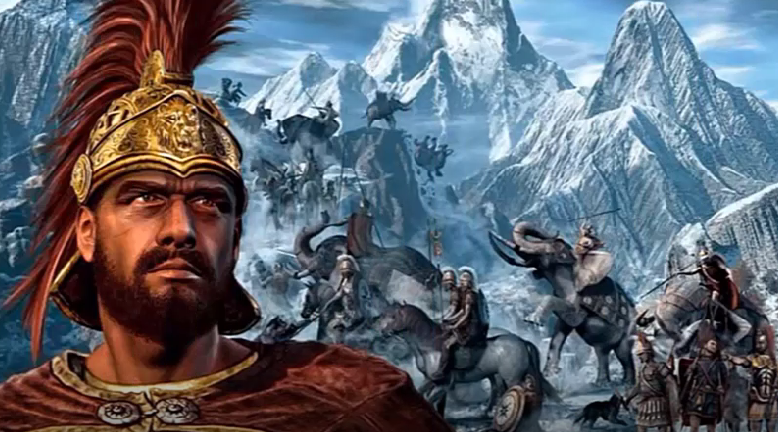
Born in Carthage (modern-day Tunisia), Hannibal was the son of the great Hamilcar Barca. Growing up in the aftermath of the First Punic War, his life was defined by the rivalry with Rome. According to historical accounts, at the age of nine, his father led him to a sacrificial altar where Hannibal swore a solemn oath of eternal hatred toward Rome.
This wasn’t just a political struggle; it was a personal mission. Hannibal grew to be a charismatic leader, a master of deception, and a general who shared the same hardships as his lowest-ranking soldiers—a trait that earned him unwavering loyalty.
⚔️ Carthage vs. Rome: A Clash of Ancient Titans
The rivalry between these two powers was a fight for the soul of the Mediterranean. Carthage was the “Mistress of the Seas,” boasting a dominant naval trade network. Meanwhile, Rome was a rising land power, known for its disciplined legions and inexhaustible manpower.
The Strategy of Surprise
Hannibal knew that challenging Rome’s navy directly was a losing game. To win, he had to take the fight to the enemy’s doorstep. This led to his decision to launch a land invasion of Italy—a plan so risky that Roman generals deemed it impossible.
🐘 The Great Crossing: Over the Alps with War Elephants
In 218 BCE, Hannibal led an army of approximately 50,000 infantry, 9,000 cavalry, and 38 war elephants across the Pyrenees and the treacherous Alps.
The journey was a brutal test of endurance. Hannibal’s forces faced freezing temperatures, deadly avalanches, and hostile mountain tribes. By the time they reached the Italian plains, half of his army had perished. However, the psychological impact was immense: the sight of towering war elephants emerging from the mist of the Alps struck terror into the hearts of the Roman people, who believed the mountains were an impenetrable wall.
🛡️ Masterclasses in Warfare: Major Battles of the Second Punic War
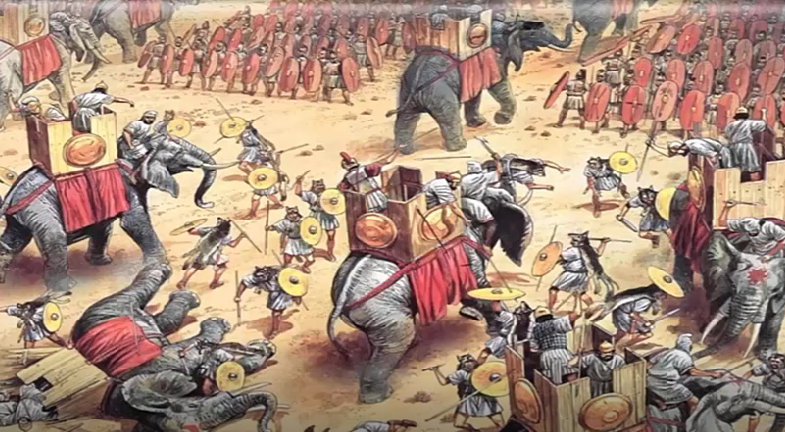
For 16 years, Hannibal remained undefeated on Italian soil. He didn’t just fight; he orchestrated masterpieces of military strategy that are still studied at West Point and Sandhurst today.
The Carthaginian Winning Streak:
- Battle of the Trebia (218 BCE): Hannibal’s first major victory, where he lured the Romans into a freezing river and ambushed them from the flanks.
- Battle of Lake Trasimene (217 BCE): Still cited as the largest and most successful military ambush in history.
- Battle of Cannae (216 BCE): Hannibal’s “Masterpiece.” Despite being outnumbered, he used a double-envelopment tactic to surround and annihilate 50,000 Roman soldiers in a single day.
Despite these crushing victories, Hannibal lacked the siege equipment and reinforcements from Carthage to capture the city of Rome itself. As his officers famously noted: “Hannibal knows how to win a victory, but not how to use it.”
📉 The Roman Counter-Strike and the Fall of a Giant
Rome eventually found its savior in Scipio Africanus. Scipio realized that to defeat Hannibal, he had to stop fighting him in Italy and instead attack the source of his power: Carthage.
- The Battle of Zama (202 BCE): This was the final showdown. Scipio used Hannibal’s own tactics against him, neutralizing the Carthaginian elephants and dealing Hannibal his first and only major defeat. This victory ended the Second Punic War and established Rome as the dominant power in the West.
The Final Exile
Hunted by Roman agents even decades after the war, Hannibal eventually fled to Bithynia (modern-day Turkey). In 182 BCE, rather than being paraded through the streets of Rome in chains, he chose to end his own life by poison, famously stating: “Let us relieve the Romans from the anxiety they have so long experienced.”
📊 Hannibal’s Campaign by the Numbers
To understand the sheer scale of Hannibal’s defiance against Rome, consider these staggering statistics:
| Category | Data |
| Initial Troops | ~100,000 (Combined forces) |
| Cavalry Support | 9,000 (The key to his flanking maneuvers) |
| War Elephants | 38 (The “tanks” of the ancient world) |
| Campaign Duration | 16 Years deep in enemy territory |
| Roman Casualties | Estimated over 150,000 during his Italian campaign |
💡 Conclusion: Why Hannibal Still Matters
Hannibal Barca was the ultimate underdog. He proved that genius, daring, and psychological warfare could bring the world’s most disciplined army to its knees. Even though he lost the war, his tactics remain the gold standard for military commanders today.

Nice post. I was checking constantly this blog and I am
impressed! Very helpful info particularly the last part 🙂 I
care for such info a lot. I was looking for this
particular information for a long time. Thank you
and good luck.
thanks very much.I would be grateful if you shared my content on your social media; it would really help my blog grow.
I love your blog.. very nice colors & theme. Did you design this website yourself or did you hire someone to do it for you?
Plz respond as I’m looking to create my own blog and would like to find out
where u got this from. cheers
I created my blog myself. I made the banner on Canva and looked for a library-themed template with a background. The rest was just editing—no coding involved. There are some YouTube videos you can search for that teach you how to customize your blog.