American Civil War: How Economic Power, Slavery, and Ambition Tore a Nation Apart
Introduction: A Nation on the Brink of Collapse
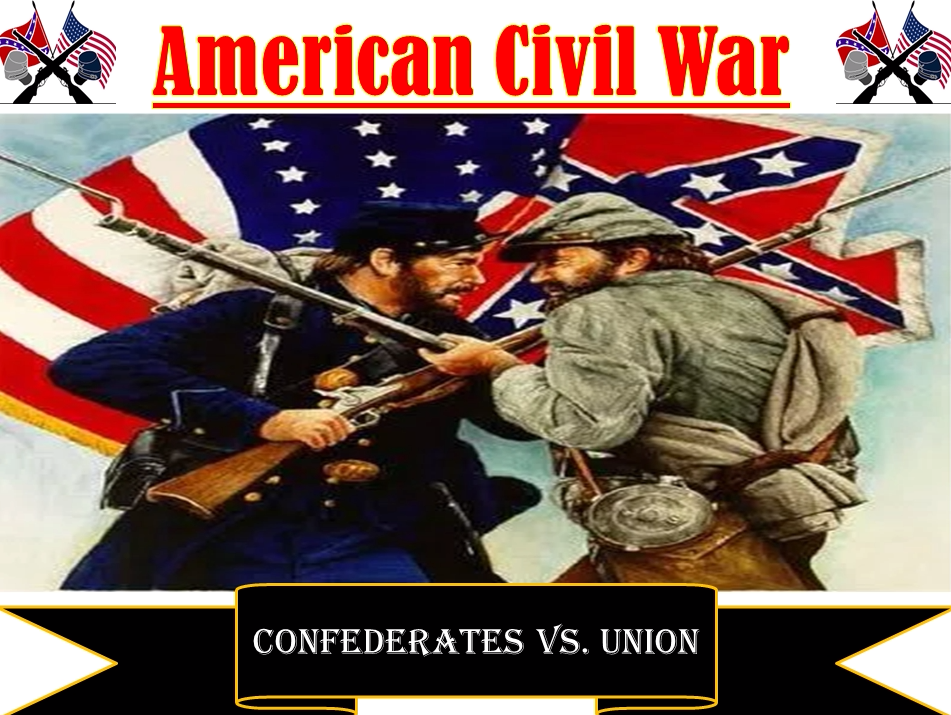
The American Civil War (1861–1865) was not merely a military conflict—it was a defining moment that reshaped the political, economic, and social foundations of the United States. Fueled by deep divisions over slavery, economic models, states’ rights, and political power, the war exposed the fragile unity of a rapidly growing nation. As the industrial Union and the agrarian Confederacy clashed, the United States entered one of the bloodiest and most transformative chapters in its history.
Economic Growth and Inequality in 19th-Century America
The Rise of the Industrial North
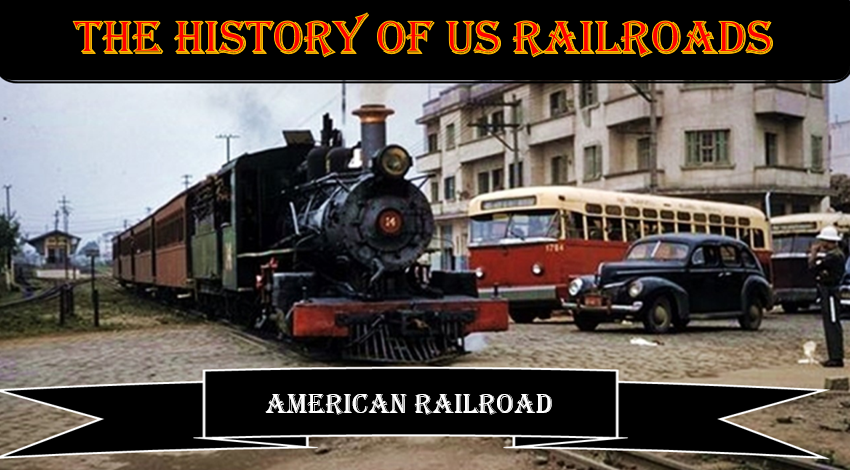
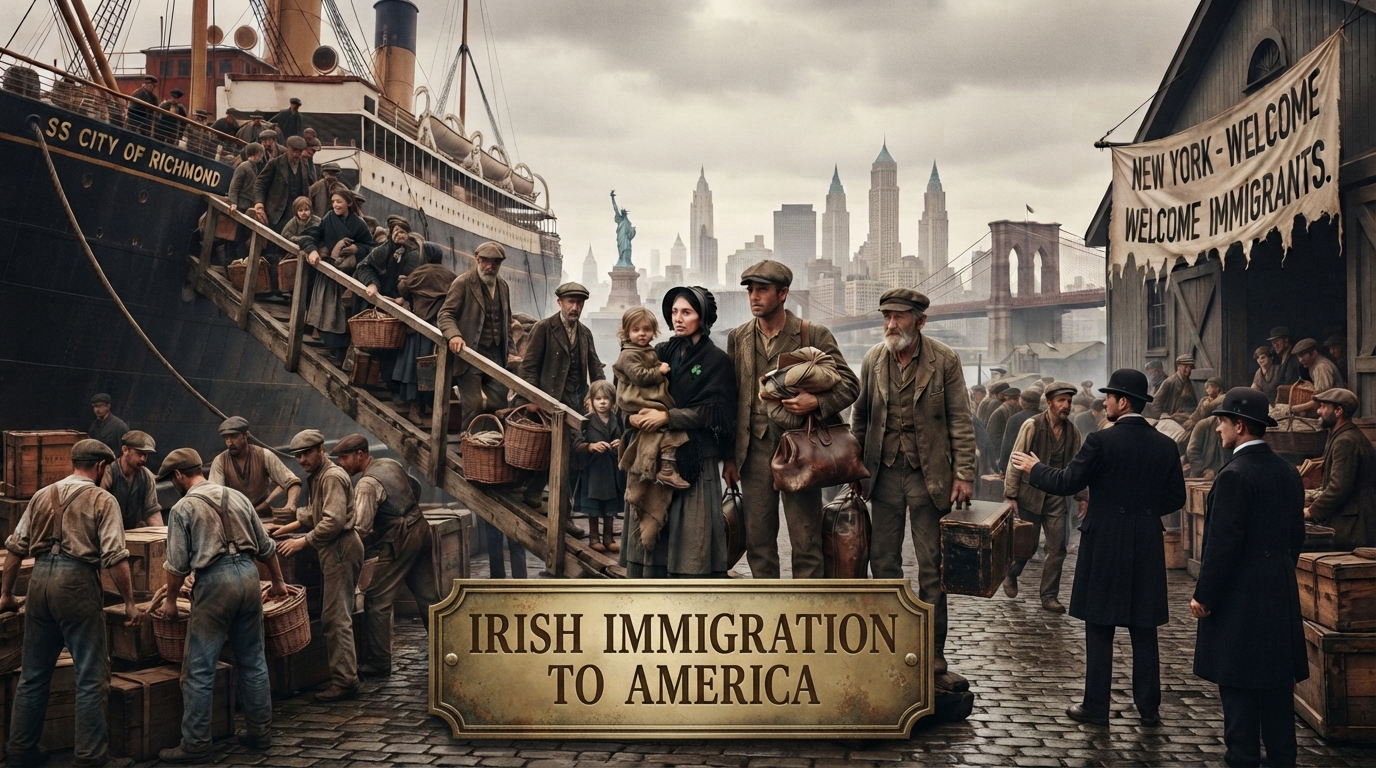
By the mid-19th century, the Northern states were undergoing accelerated industrialization. Factories multiplied, cities expanded, and new technologies transformed production and transportation. The expansion of railroads, steel manufacturing, and urban infrastructure created jobs and stimulated consumer markets. Immigration further fueled economic growth, supplying factories with wage labor and expanding domestic consumption.
This industrial economy relied on free labor, wage systems, and market expansion—values fundamentally opposed to slavery.
The Agrarian South and the Cotton Economy
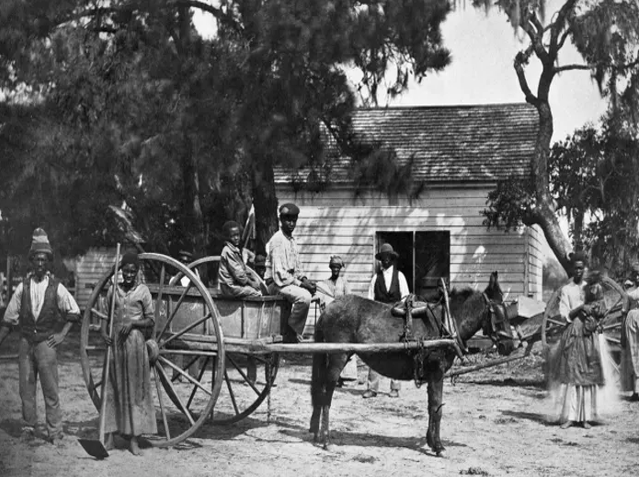
In contrast, the Southern states were deeply dependent on an agricultural system centered on cotton production. Cotton exports powered the Southern economy and positioned the region as a major player in global trade. However, this prosperity was built almost entirely on the forced labor of more than 4 million enslaved African Americans.
For Southern elites, slavery was not only an economic necessity but also a social and cultural institution that defined their way of life.
Irreconcilable Differences Between North and South
Conflicting Economic Visions
As Northern industries expanded, the need for labor and new markets increased. Northern leaders and industrialists increasingly viewed slavery as an obstacle to national economic integration. Turning enslaved people into wage-earning workers and consumers aligned with capitalist expansion.
The South interpreted these ambitions as a direct threat. Ending slavery would collapse the plantation economy, dismantle social hierarchies, and undermine political power in slaveholding states.
Secession as a Political Strategy
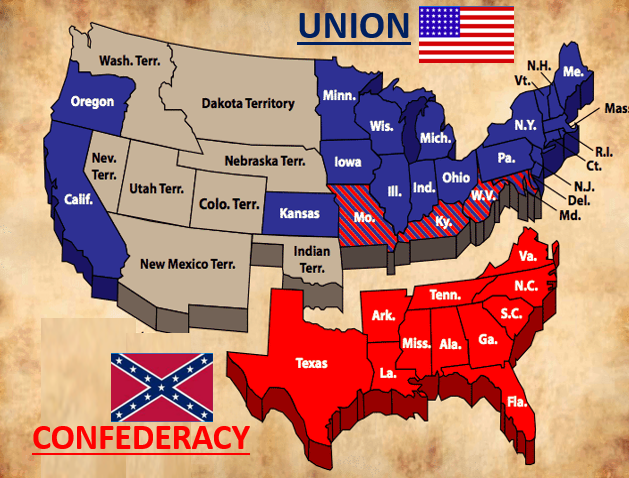
Unable to reconcile these opposing interests, Southern leaders concluded that secession was the only solution. In 1861, they formed the Confederate States of America, with Richmond, Virginia, as its capital. The remaining states upheld the Union, governed from Washington, D.C.
Political Crisis and the Election of Abraham Lincoln
A President Who Divided Opinions
The election of Abraham Lincoln in November 1860 intensified national tensions. Though Lincoln was not an immediate abolitionist, his opposition to the expansion of slavery alarmed Southern leaders. His victory, achieved without Southern electoral support, convinced many states that their political influence within the Union had ended.
Before Lincoln even took office, South Carolina, Mississippi, Florida, Alabama, Georgia, and Louisiana seceded, followed soon by Texas. The Confederacy appointed Jefferson Davis as its president.
The Spark That Ignited the American Civil War
The Attack on Fort Sumter
The fragile peace collapsed on April 12, 1861, when Confederate forces led by General P.G.T. Beauregard fired on Fort Sumter in South Carolina. This act of aggression left President Lincoln with no alternative but to defend the Union.
The American Civil War had officially begun.
Military Leadership and Strategic Advantages
Robert E. Lee vs. Ulysses S. Grant
Two iconic generals came to symbolize the conflict:
-
General Robert E. Lee, commander of Confederate forces, was a brilliant tactician with strong military traditions.
-
Ulysses S. Grant, leading the Union army, proved relentless, strategic, and decisive.
Union Superiority in Infrastructure and Technology
The Union Army held significant strategic advantages:
-
An extensive railroad network
-
A powerful navy
-
Industrial production capacity
-
Telegraph communication, allowing real-time coordination
The Confederacy, while motivated and skilled, lacked industrial depth and modern logistics.
Early Battles and Confederate Momentum
The Battle of Bull Run (July 21, 1861) shocked the North when a smaller Confederate force defeated Union troops near Washington, D.C. This victory boosted Southern morale and established Robert E. Lee as a formidable commander.
However, early success masked deeper structural weaknesses that would later prove fatal to the Confederate cause.
Turning Points: Vicksburg and Gettysburg
Grant’s Rise and the Mississippi Campaign
Grant’s victories at Fort Donelson, Shiloh, and Nashville demonstrated his aggressive strategy. The capture of Vicksburg on July 4, 1863, split the Confederacy and gave the Union control of the Mississippi River, crippling Southern supply lines.
The Battle of Gettysburg
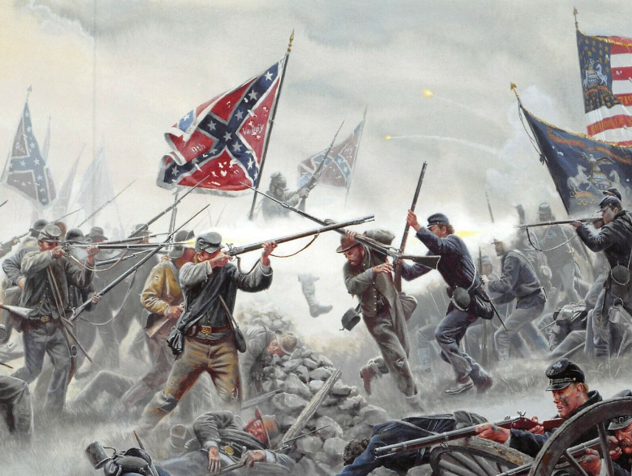
Almost simultaneously, Lee suffered a devastating defeat at Gettysburg. In just three days, the Confederacy lost tens of thousands of soldiers. From that moment forward, Southern victory became increasingly unlikely.
Total War and the Fall of the Confederacy
Grant, Sherman, and Relentless Pressure

As Union commander-in-chief, Grant embraced a strategy of total war, aiming to exhaust the South’s resources. Despite heavy casualties at Spotsylvania and Cold Harbor, Union forces advanced steadily.
General William T. Sherman’s capture of Atlanta in 1864 shattered Confederate morale and ensured Lincoln’s reelection. Shortly afterward, General Philip Sheridan forced Lee’s surrender at Appomattox Court House on April 9, 1865.
The war had ended.
The First Modern War in History
The American Civil War introduced innovations that redefined warfare:
-
Railroads for mass troop movement
-
Ironclad warships
-
Repeating rifles and heavy artillery
-
Military telegraph systems
-
Organized intelligence and reconnaissance
-
Industrial-scale logistics
These elements marked the transition to modern warfare.
Reconstruction and the Long Road to Recovery
Although the Union was preserved, the cost was staggering. More than 800,000 soldiers lost their lives, and the South lay economically devastated. The Reconstruction Era attempted to rebuild the nation and redefine citizenship, but deep racial and political divisions persisted for decades.
Conclusion: A War That Redefined America
The American Civil War permanently transformed the United States. It ended slavery, strengthened federal authority, and set the nation on a new economic and political path. Yet its legacy—conflict, sacrifice, and unresolved inequality—continues to shape American society today.
Understanding this war is essential to understanding the United States itself.