The Beginning of a Tragedy: the Eastern Front and the Russian Disaster at Tannenberg
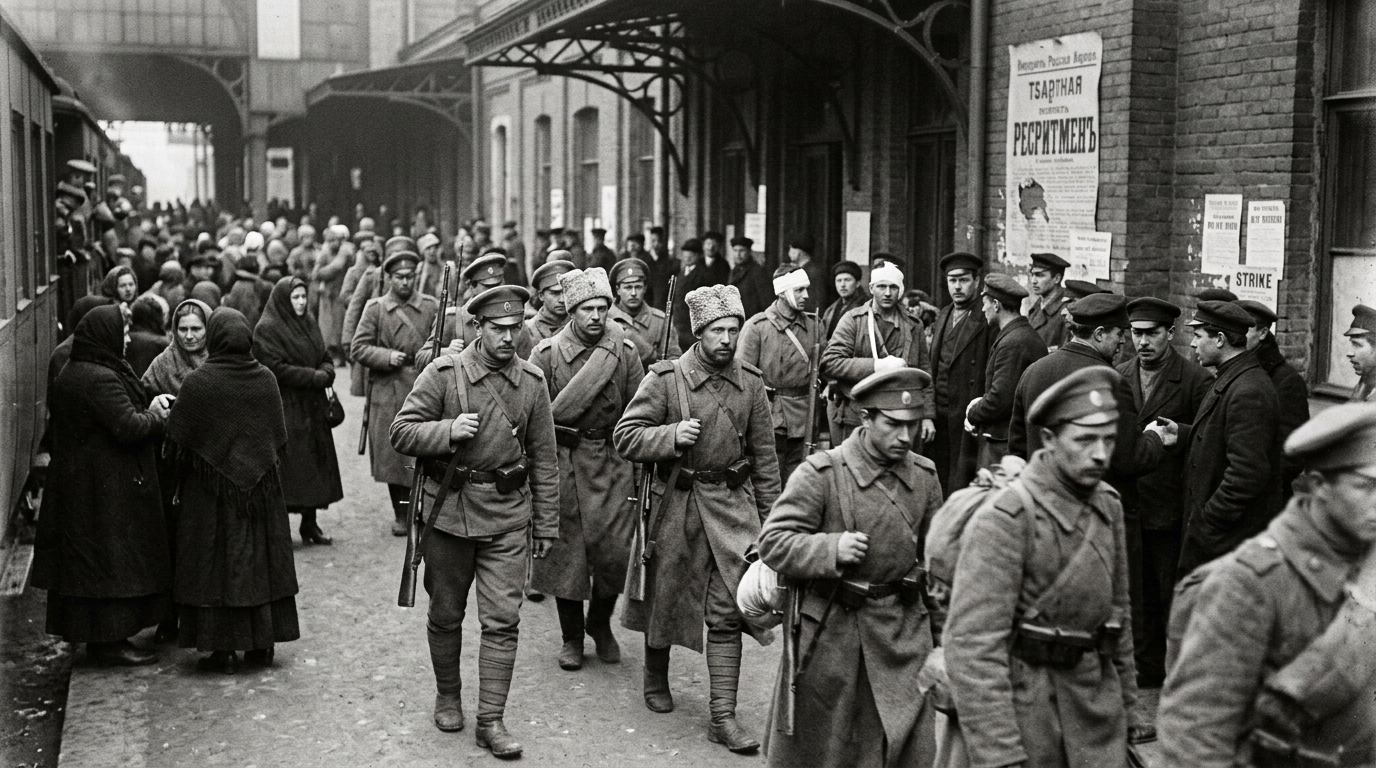
When World War I began in July 1914, few could have imagined the scale of destruction that would engulf the world. Initial attention focused on the Western Front—Germany, France, and England. Meanwhile, in Eastern Europe, a silent tragedy was unfolding. Russia, under Czar Nicholas II, quickly mobilized millions of men to invade East Prussia, confident that superior numbers would crush the Germans. But what followed was one of the swiftest and most humiliating defeats in modern military history.
The Battle of Tannenberg, fought from August 26 to 30, 1914, became a nightmare for the Imperial Russian Army. German generals Paul von Hindenburg and Erich Ludendorff executed a flawless trap. With precise strategic maneuvers exploiting a lack of coordination between Russia’s two armies, they completely encircled the enemy. It’s estimated that around 90,000 Russian soldiers were captured and more than 50,000 killed or wounded. A massacre. General Alexander Samsonov, shamed by the catastrophe, took his own life. Russian morale collapsed, and confidence in the czar’s leadership began to crumble.
Though Tannenberg is rarely mentioned outside academic circles, its importance was immense. It was Germany’s first major victory on the Eastern Front and proved the war wouldn’t be confined to Western trenches. Russia’s humiliation there triggered a domino effect: forcing Russian high command to reorganize, overwhelming its fragile logistics, and sowing the seeds of internal instability that would explode into revolution three years later.
Austro-German Advance: Relentless Offensives and the Collapse of Russian Resistance
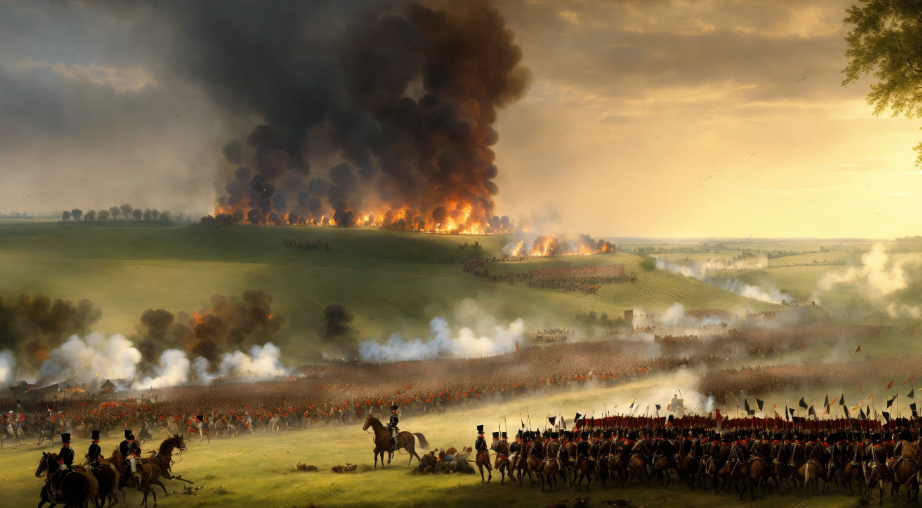
While the Russians struggled to recover from Tannenberg, new offensives struck from the south. Austria-Hungary, allied with Germany, launched attacks into Galicia and the Carpathians—not merely to hold the Russians, but to drive them from strategic lands. Bolstered by German reinforcements, the campaign gained momentum. 1915 proved especially brutal, defined by intense battles and a steady push eastward by the Central Powers.
These Austro-German pressures didn’t just recapture lost territory—they seized new cities and vital rail lines for supply. Russian losses were colossal: over 2 million men among the dead, wounded, and captured. Towns fell one by one, and peasants who once supported the war began to question its purpose. Hunger, cold, and fatigue became the Russian troops’ constant companions. Loyalty to the czar collapsed under the weight of these defeats.
This struggle in the East was more than a clash of armies—it was a fight of systems. On one side, Czarist Russia with its outdated bureaucracy and agrarian economy; on the other, a modern, mechanized, strategic Germany. The disparity became unbearable for the Russians, whose dream of victory devolved into deep despair—and eventually, revolution.
The 1917 Revolution: the End of Czarism and Russia’s Exit from the War
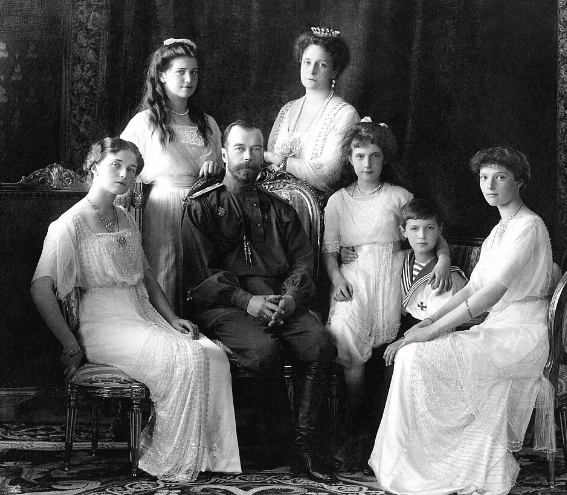
In March 1917, after years of military humiliation, economic crisis, and social unrest, the unthinkable happened: Czar Nicholas II was forced to abdicate. Widespread demonstrations, along with insubordination among soldiers and workers, paralyzed Petrograd (today’s St. Petersburg). The monarchy collapsed with little resistance, paving the way for the Provisional Government—led by liberal and moderate socialist politicians—who promised to continue the war until victory.
But the Russian people had had enough. When Vladimir Lenin returned from exile in April, he carried a fervent message: “Peace, Land, and Bread.” It resonated with soldiers and peasants alike. In November (October by the Russian calendar), the Bolsheviks toppled the provisional government and took power. Lenin’s first priority was clear: immediate withdrawal from the war. Thus, in March 1918, Russia signed the Treaty of Brest-Litovsk with Germany. It ceded vast territories—Ukraine, Poland, parts of the Baltics and Balkans—in exchange for peace.
Russia’s departure triggered swift consequences. Germany, freed from the Eastern Front, transferred more than 1 million troops to the Western Front. It was a high-risk gamble—especially as the United States had just entered the war. The Russian Revolution thus marked a turning point. It transformed an empire into a socialist republic and changed the global balance of military power.
The Gallipoli Disaster: the Fall of a Bold Plan
While Russia remained in the conflict, the Allies sought a new front to aid their Eastern partners and weaken the Ottoman Empire, Germany’s ally. In April 1915, British, French, Australian, and New Zealand forces launched the Gallipoli campaign, aiming to seize the Dardanelles Strait from the Aegean Sea to the Sea of Marmara. Their goal: take Constantinople and knock the Ottomans out of the war. But the plan failed from the start.
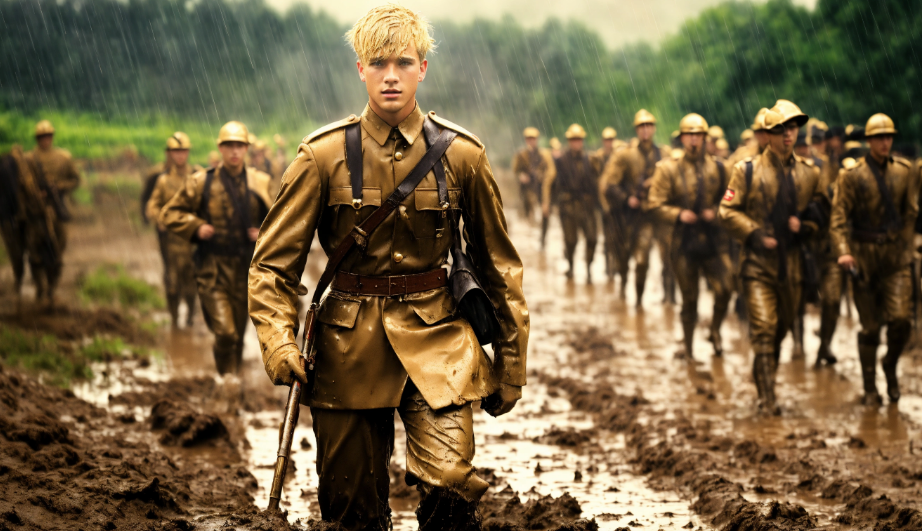
Troops landed on the Gallipoli Peninsula, facing well-entrenched defenses commanded by then-colonel Mustafa Kemal—future Atatürk. Trenches filled with bodies, mud, and despair. Extremes of heat and cold worsened the suffering. The campaign dragged on until January 1916, resulting in some 250,000 Allied casualties—a resounding failure that shattered British morale and fueled Turkish nationalism.
Gallipoli wasn’t just a military defeat—it was a political mistake. It exposed the arrogance of Allied commanders, who underestimated their foes and overestimated their own capabilities. The quiet, unannounced withdrawal starkly symbolized acknowledgment of failure. The Eastern Front was far from resolved.
Italy Enters the War and the Mountain Warfare
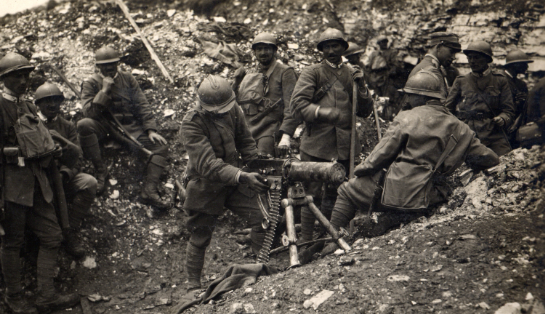
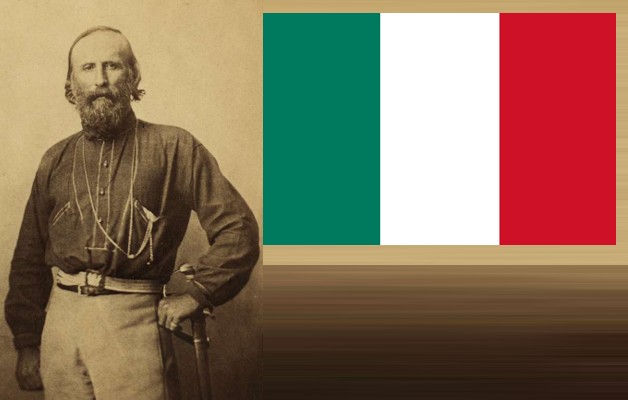
In May 1915, Italy—initially neutral—joined the war on the side of the Triple Entente after being promised Austrian territory. A new front opened in the Alps, where Italian and Austro-Hungarian forces battled in hostile, nearly inaccessible terrain. Mountain warfare ensued, with battles taking place atop ice-cold peaks, in tunnels carved through rock, where soldiers froze before they were even shot.
The Italian campaign was relentless and costly, especially along the Isonzo River, where twelve battles were fought between 1915 and 1917. Territorial gains were minimal, while human losses were devastating. Over 1 million soldiers were killed or wounded on this front without delivering a decisive advantage. While Italy’s entry held symbolic importance, it ultimately complicated the war, adding another volatile layer to an already chaotic battlefield.
Despite the hardships, Italy’s participation was crucial in stretching Austro-Hungarian forces thin. By forcing the empire to defend multiple fronts, Italy contributed to wearing down the enemy—although at tremendous cost. Mountain warfare, often overlooked, became its own theater of horrors, where freezing conditions were as lethal as the enemy’s bullets.
The Invasion of Serbia: the Brutal End of a Besieged Nation
In 1914, Serbia was the flashpoint for World War I after the assassination of Archduke Franz Ferdinand in Sarajevo. But it wasn’t until 1915 that this small Balkan country faced the full might of its enemies. Isolated and running low on supplies, Serbia was hit by a coordinated offensive from three powerful invaders: Austria-Hungary, Germany, and Bulgaria, which joined the war for its own gains.
In October 1915, the offensive began—and it was devastating. Serbian forces, worn down after a year of fighting, were forced to retreat in the face of attacks from the north, east, and west. The campaign was marked by forced marches, mountain combat, and brutal conditions. Both the Serbian army and their civilian population retreated through the snowy peaks of Montenegro and Albania in one of modern history’s bleakest withdrawals. Over 100,000 civilians perished from starvation, cold, or exhaustion. By December 1915, Serbia was fully occupied.
The country was carved up among the occupiers, and resistance was crushed. Still, the Serbian army did not disappear. It reorganized with French help on Corfu Island and reentered the war in its final years. Serbia’s occupation revealed the brutal reality of Balkan warfare—not just between armies but against entire populations. It was a temporary end to a nation—but not to its resilience.
The Turning Point of 1918: the Central Powers’ Chain Collapse
The year 1918 witnessed a sequence of events that brought the Central Powers to their knees. Germany tried one last gamble on the Western Front with the “Spring Offensive” in March, but it soon became clear the tide had turned. The arrival of over 2 million American troops, brimming with modern equipment and fresh energy, began shifting momentum decisively in favor of the Allies.
Meanwhile, in Southeastern Europe, the Allied base at Salonika, Greece, became the launch point for a key offensive. British, French, Serbian, Italian, and even Greek troops were unleashed against Bulgaria—the Central Powers’ weakest link. On September 29, 1918, Bulgaria surrendered, signing an armistice and opening the path toward the Ottoman Empire’s heart.
Bulgaria’s defeat caused a seismic shift. The Ottoman Empire—already weakened by years of war, British attacks in Palestine, and internal Arab uprisings—collapsed swiftly. On October 30, 1918, the Armistice of Mudros was signed, ending Ottoman participation. Finally, Austria-Hungary—plagued by internal revolts, starvation, and a total breakdown in political structure—surrendered on November 3. The empire collapsed almost overnight into new nations: Hungary, Czechoslovakia, Yugoslavia, and Austria emerged from its ashes.
Isolated and surrounded by victorious armies, Germany had no choice. On November 11, 1918, the Armistice of Compiègne was signed in a train car in Compiègne Forest, marking the war’s official end. The German Empire, which had sought European domination, was now defeated, humiliated, and on the verge of its own revolution.
The Forgotten War in Africa: Lettow-Vorbeck and German Resistance
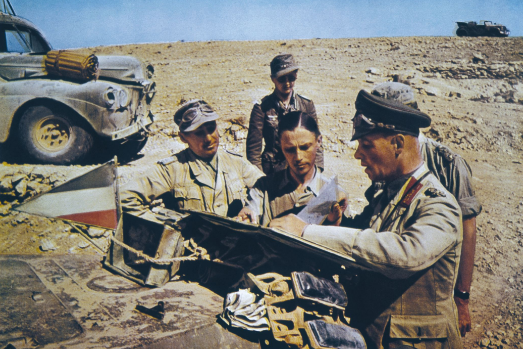
As Europe entered the war’s final months, a distant and often forgotten battlefield was fully active: Africa. German colonies on the continent had been under attack since 1914—Togo and Cameroon fell quickly to British and French forces, and Southwest Africa (modern Namibia) was conquered by South African troops. Yet the most remarkable story unfolded in German East Africa (modern Tanzania), where one German officer forged one of the war’s most unique chapters.
Paul von Lettow-Vorbeck, a seasoned Prussian officer, decided his mission was simple: keep as many Allied troops occupied in Africa as possible, away from Europe. With just 300 German soldiers and approximately 2,000 African askaris, he launched a guerrilla war that lasted beyond the European armistice. His strikes were surgical—ambushes, sabotage of railways, raids on supply depots—all carefully planned.
Against all odds, Lettow-Vorbeck was never captured, never surrendered in battle, and even invaded Rhodesia (present-day Zimbabwe), bringing the war beyond German borders. His achievements became legendary. Only on November 25, 1918, two weeks after the European war ended, did he learn of Germany’s surrender and lay down arms. On March 2, 1919, he returned to Berlin, welcomed as a hero. He marched triumphantly through the Brandenburg Gate, the general who fought to the end—and never lost.
The Conflict’s Scale: Numbers, Losses, and Legacies
World War I claimed the lives of approximately 10 million soldiers and left over 20 million wounded. The conflict involved more than 60 countries across three continents. The Gallipoli campaign alone inflicted over 250,000 Allied casualties, while Eastern fronts recorded even higher civilian and military losses.
The simultaneous collapse of the Austro-Hungarian, Ottoman, German, and Russian empires forever altered the political maps of Europe and the Middle East. In Africa, former German territories were divided among the victors. The seeds of 20th-century conflicts were sown in that blood-soaked soil.
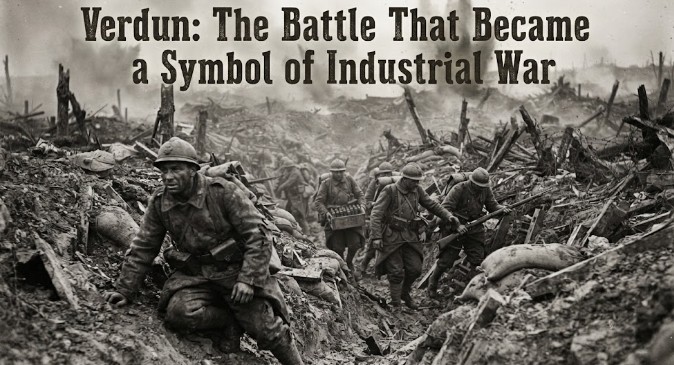
But beyond numbers, World War I marked a watershed in human consciousness. Industrialized warfare—with trenches, poison gas, airplanes, tanks, and machine guns—made the battlefield impersonal and mechanical. For the first time, humanity faced mass destruction not as a possibility but as an everyday reality.
Conclusion: A New World Born from Chaos
World War I was not merely a conflict among nations—it was the end of an era. Empires toppled, revolutions ignited, borders redrawn, and millions died for promises made by generals and politicians. The Russian defeat at Tannenberg, the Gallipoli disaster, Italy’s entry, the Balkan collapse, Lettow-Vorbeck’s African guerrillas—all these events, spread across thousands of miles, converged on one outcome: the collapse of the old order.
Even though the war officially ended in 1918, its aftershocks echoed for decades. The Treaty of Versailles laid unintended groundwork for World War II. Hastily drawn borders in the Balkans and Middle East created instability that persists today. Africa—used as a pawn by European empires—remained a colonial periphery long afterward.
Studying World War I is to witness the birth of the modern world. It teaches us how strategic miscalculations, imperial ambition, and diplomatic failure plunged millions into the abyss. And above all, it reminds us that history is forged not only by famous figures, but also by the countless individuals who fell in anonymous trenches, distant forests, and forgotten jungles.