The Kashmir Conflict Between India and Pakistan: Complete History, Causes, Wars, and Modern Geopolitical Impact
Introduction
The Kashmir conflict is one of the most significant and enduring territorial disputes in modern international relations. For more than seven decades, the region of Kashmir has remained at the center of political tension, military confrontations, diplomatic disputes, and security concerns involving India and Pakistan.
Located in the northern part of the Indian subcontinent, Kashmir is strategically positioned near the borders of India, Pakistan, China, and Afghanistan. Beyond its geographic importance, the region also holds deep religious, cultural, historical, and economic significance.
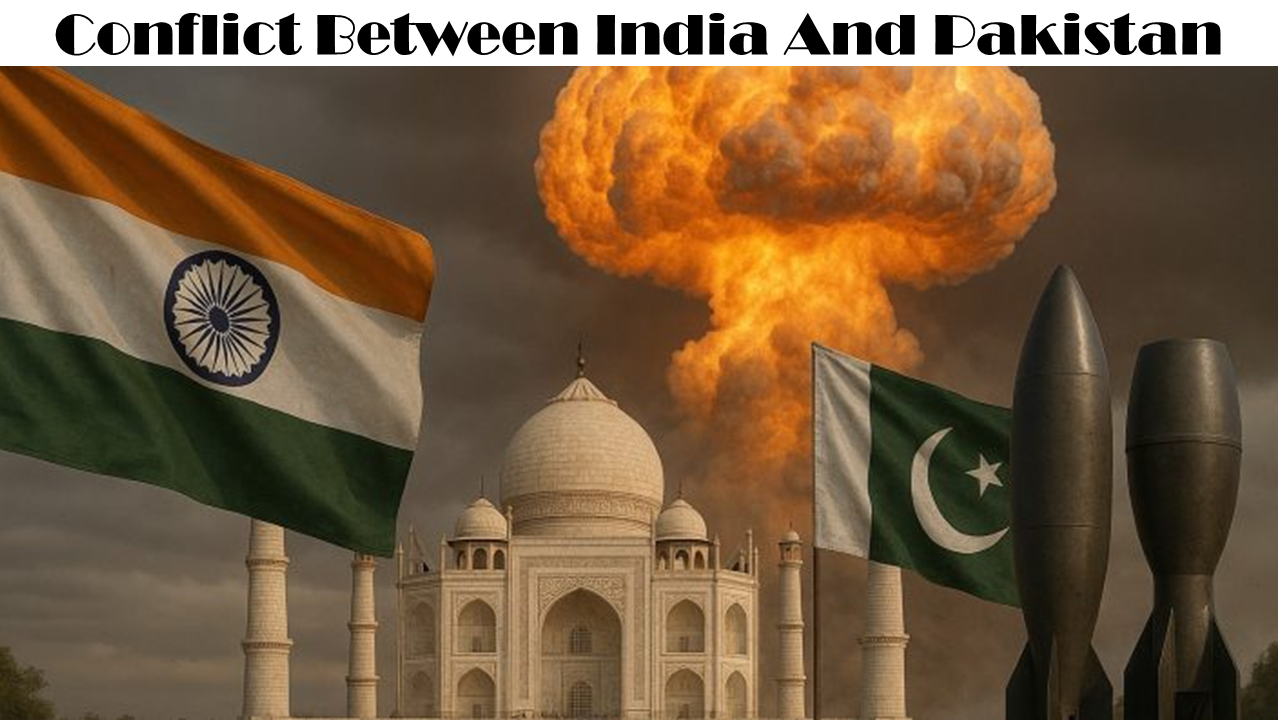
Since the partition of British India in 1947, Kashmir has been disputed by India and Pakistan, leading to multiple wars, military standoffs, political crises, and ongoing instability. Today, the conflict remains one of the world’s most sensitive geopolitical issues, especially because both India and Pakistan possess nuclear weapons.
This article explores the complete history of the Kashmir conflict, the origins of the dispute, the major wars between India and Pakistan, the role of international organizations, the humanitarian impact, and the modern political realities shaping the region today.
What Is Kashmir?
Kashmir is a region located in the Himalayan mountain range in South Asia. The area is known for its stunning landscapes, rivers, glaciers, valleys, forests, and cultural diversity.
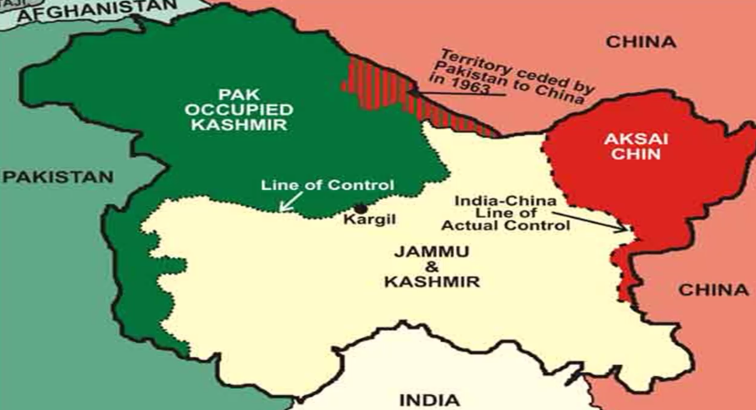
Historically, the larger Kashmir region covered approximately 222,000 square kilometers (85,700 square miles). Today, it is divided into territories administered by three countries:
- India administers Jammu and Kashmir and Ladakh
- Pakistan administers Azad Kashmir and Gilgit-Baltistan
- China controls Aksai Chin and the Trans-Karakoram Tract
The region has an estimated population of more than 20 million people across all administered territories.
Kashmir’s strategic location makes it highly important for trade routes, military positioning, water resources, and regional security.
Historical Background of Kashmir
Ancient and Medieval Kashmir
The history of Kashmir dates back thousands of years. Ancient Hindu texts and Buddhist records mention Kashmir as an important cultural and intellectual center.
Over centuries, the region was influenced by multiple dynasties and empires, including:
- Mauryan Empire
- Kushan Empire
- Hindu Shahis
- Mughal Empire
- Afghan Durrani Empire
- Sikh Empire
Islam became prominent in Kashmir during the 14th century after the arrival of Muslim rulers and missionaries. Over time, the Muslim population grew significantly, while Hindu and Buddhist communities continued to exist throughout the region.
This religious diversity later became an important factor during the partition of British India.
British Rule and the Creation of the Princely State
In 1846, after the First Anglo-Sikh War, the British East India Company signed the Treaty of Amritsar with Gulab Singh, a Dogra ruler.
Under the treaty:
- Gulab Singh purchased Kashmir from the British for 7.5 million rupees
- The princely state of Jammu and Kashmir was officially established
- The Dogra dynasty began ruling the region
The princely state was unique because:
- Around 75% of the population was Muslim
- The rulers were Hindu
- The region included multiple ethnic and linguistic groups
During British colonial rule, Jammu and Kashmir maintained semi-autonomous status under British supervision.
The Partition of India in 1947
The Division of British India
In August 1947, British India was divided into two independent nations:
- India, with a Hindu-majority population
- Pakistan, created as a Muslim-majority state
At the time of partition, there were more than 560 princely states that had to decide whether to join India or Pakistan.
The ruler of Jammu and Kashmir, Maharaja Hari Singh, initially wanted the state to remain independent rather than join either country.
However, the situation quickly deteriorated.
The First Kashmir War (1947–1948)
Tribal Invasion and Accession to India
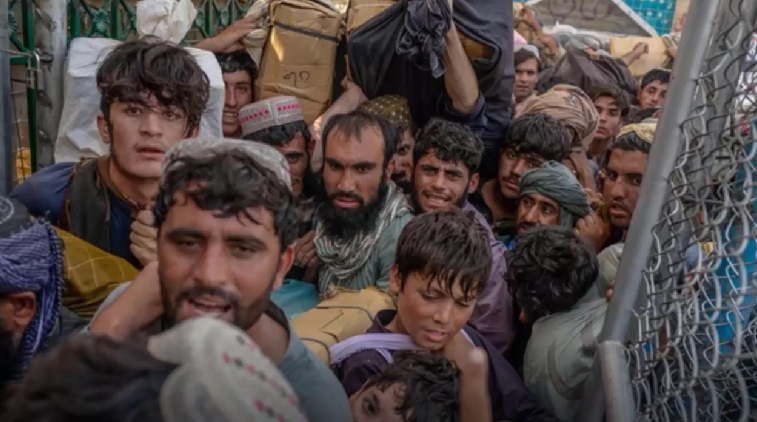
In October 1947, armed tribal militias from Pakistan’s northwest region entered Kashmir. Their objective was to support the Muslim population and pressure the Maharaja to join Pakistan.
Facing military collapse, Maharaja Hari Singh requested assistance from India.
India agreed on the condition that Kashmir formally accede to India through the Instrument of Accession.
On October 26, 1947:
- Hari Singh signed the accession agreement
- India deployed troops into Kashmir
- The first Indo-Pakistani war officially began
Military Casualties and Territorial Division
The conflict lasted until 1948 and resulted in thousands of deaths.
Estimated figures include:
- More than 1,500 Indian soldiers killed
- Several thousand Pakistani and tribal fighters killed
- Tens of thousands of civilians displaced
The United Nations intervened and negotiated a ceasefire effective January 1, 1949.
The ceasefire established a temporary boundary called the Ceasefire Line, later renamed the Line of Control (LoC).
After the war:
- India controlled approximately 55% of Kashmir
- Pakistan controlled around 30%
- China later gained control over eastern areas
United Nations Involvement
The Kashmir dispute quickly became an international issue.
In 1948, the United Nations Security Council passed resolutions calling for:
- A ceasefire
- Withdrawal of Pakistani forces
- Reduction of Indian military presence
- A plebiscite allowing Kashmiris to decide their future
However, disagreements over implementation prevented the plebiscite from occurring.
To this day, India and Pakistan interpret these UN resolutions differently.
The Second Indo-Pakistani War (1965)
Escalation of Tensions
By the 1960s, tensions over Kashmir intensified again.
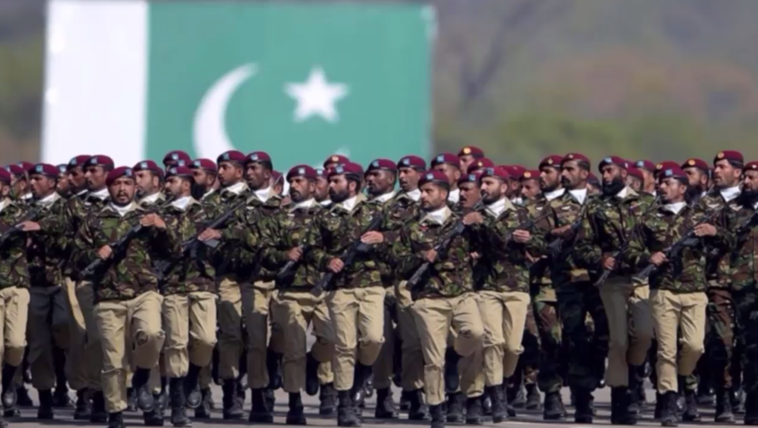
In 1965, Pakistan launched Operation Gibraltar, sending infiltrators into Indian-administered Kashmir to encourage rebellion against Indian rule.
India responded militarily, leading to a full-scale war.
Scale of the Conflict
The 1965 war involved:
- Hundreds of tanks
- Large-scale air battles
- Heavy artillery exchanges
- Major troop deployments
Estimated casualties:
- India: approximately 3,000 soldiers killed
- Pakistan: approximately 3,800 soldiers killed
The war ended after Soviet-mediated negotiations in Tashkent, Uzbekistan.
The resulting Tashkent Agreement restored pre-war boundaries but did not solve the Kashmir dispute.
The 1971 War and the Birth of Bangladesh
Causes of the Conflict
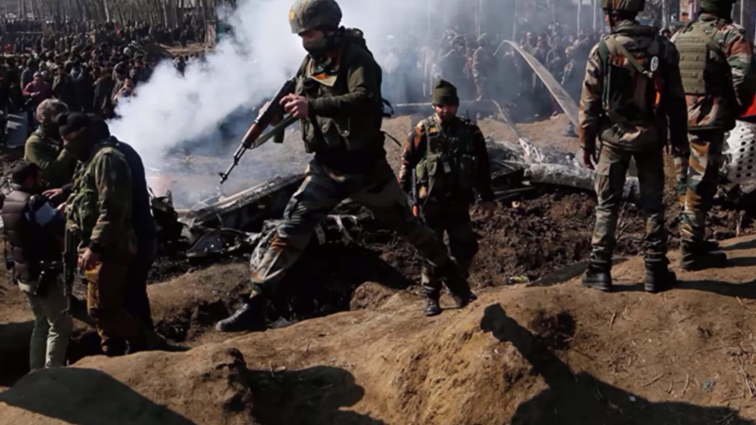
The third Indo-Pakistani war occurred in 1971, primarily due to political unrest in East Pakistan.
India supported Bengali nationalist movements in East Pakistan during the conflict.
The war lasted only 13 days but became one of the largest military confrontations since World War II.
Major Outcomes
Key outcomes included:
- Creation of Bangladesh
- Surrender of approximately 93,000 Pakistani troops
- Significant weakening of Pakistan militarily and politically
Although Kashmir was not the direct cause of the war, relations between India and Pakistan became even more hostile afterward.
The Simla Agreement of 1972
Following the 1971 war, India and Pakistan signed the Simla Agreement.
The agreement established:
- Commitment to peaceful negotiations
- Respect for the Line of Control
- Bilateral resolution of disputes
India later emphasized bilateral diplomacy as the preferred method for resolving Kashmir-related issues.
Rise of Insurgency in Kashmir During the 1980s and 1990s
Political Unrest and Militancy
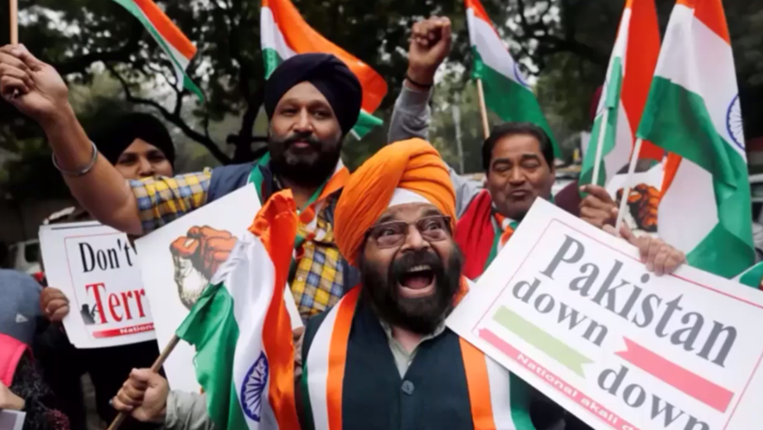
By the late 1980s, dissatisfaction and political instability in Indian-administered Kashmir contributed to the rise of insurgent movements.
Several militant organizations emerged, some advocating:
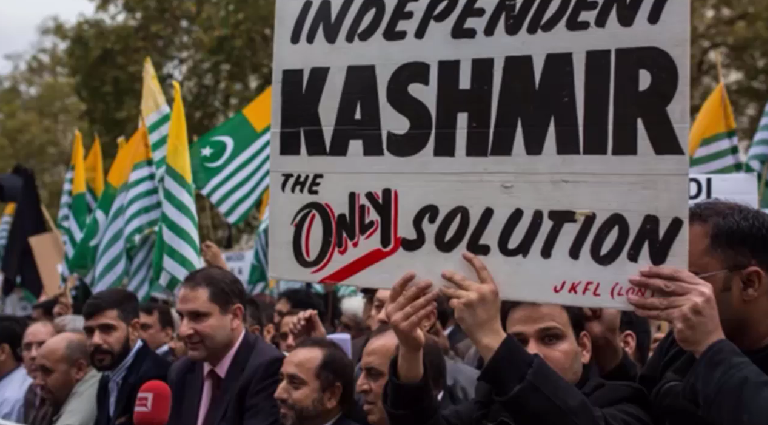
- Independence for Kashmir
- Merger with Pakistan
- Armed resistance against Indian administration
India accused Pakistan of supporting and training militant groups, while Pakistan denied direct involvement.
Humanitarian Impact
The insurgency caused severe humanitarian consequences:
- Tens of thousands of deaths since 1989
- Large-scale displacement of civilians
- Migration of Kashmiri Pandits from the valley
- Economic disruption
- Long-term security operations
Human rights organizations have repeatedly expressed concerns regarding violence, civilian casualties, and restrictions affecting local populations.
Nuclear Weapons and the Kashmir Conflict
Nuclear Tests in 1998
A major turning point occurred in 1998.
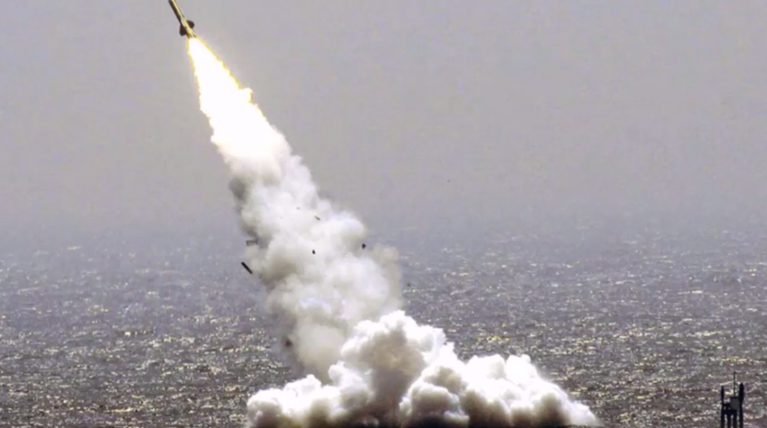
India conducted nuclear tests in May 1998 under Operation Shakti.
Pakistan responded shortly afterward with its own nuclear tests under Chagai-I.
As a result:
- Both countries officially became nuclear powers
- International concern increased dramatically
- Kashmir became viewed as a potential nuclear flashpoint
Today:
- India possesses an estimated 160–170 nuclear warheads
- Pakistan possesses approximately 170 nuclear warheads
These estimates vary among international defense organizations.
The Kargil War of 1999
Conflict in the Mountains
In 1999, armed conflict erupted again in the Kargil district of Kashmir.
Pakistani soldiers and militants occupied high-altitude positions on the Indian side of the Line of Control.
India launched military operations to retake the territory.
Casualties and International Pressure
The conflict resulted in:
- More than 1,000 total military deaths
- Extensive artillery and air combat
- Significant international diplomatic pressure
The United States and other countries urged Pakistan to withdraw forces.
The conflict ended after Pakistani withdrawal from the occupied positions.
Terrorism and Security Concerns
Parliament Attack in 2001
In December 2001, militants attacked the Indian Parliament in New Delhi.
India blamed Pakistan-based extremist organizations.
The attack triggered:
- Massive troop mobilizations
- Heightened military tensions
- International fears of nuclear escalation
For months, both countries remained on high military alert.
Mumbai Attacks of 2008
Another major crisis occurred during the Mumbai terrorist attacks in November 2008.
The attacks killed more than 170 people and injured hundreds.
India accused the Pakistan-based militant group Lashkar-e-Taiba of responsibility.
The attacks severely damaged diplomatic relations between the two countries.
Article 370 and Constitutional Changes in 2019
Revocation of Special Status
On August 5, 2019, the Indian government revoked Article 370 of the Constitution.
Previously, Article 370 granted Jammu and Kashmir:
- Limited autonomy
- Separate constitution
- Special legal privileges
The Indian government argued that removing Article 370 would:
- Improve national integration
- Encourage investment
- Promote development
Reactions and Consequences
The decision generated significant reactions:
India’s Perspective
Supporters believed the move would:
- Strengthen governance
- Reduce separatism
- Boost economic growth
Pakistan’s Perspective
Pakistan strongly opposed the decision and downgraded diplomatic relations with India.
International Reactions
International organizations expressed concerns regarding:
- Communication restrictions
- Detentions
- Civil liberties
- Regional stability
Economic Importance of Kashmir
Kashmir possesses significant economic value due to:
- Tourism
- Agriculture
- Hydropower
- Water resources
- Strategic trade routes
Tourism
Before periods of instability, millions of tourists visited Kashmir annually.
Popular attractions include:
- Srinagar
- Dal Lake
- Gulmarg
- Pahalgam
- Sonamarg
Tourism contributes substantially to local employment and income.
Water Resources
The Indus River system flows through the Kashmir region.
These rivers are critically important for:
- Agriculture
- Drinking water
- Hydroelectric power
The Indus Waters Treaty, signed in 1960 with World Bank mediation, remains one of the few successful agreements between India and Pakistan.
Despite tensions, the treaty has largely survived decades of conflict.
Military Presence in Kashmir
Kashmir is considered one of the most militarized regions in the world.
Estimates suggest:
- Hundreds of thousands of security personnel are stationed in Indian-administered Kashmir
- Frequent patrols and checkpoints exist along the Line of Control
The heavily fortified border experiences periodic ceasefire violations and exchanges of fire.
China’s Role in the Kashmir Dispute
China also plays a major role in the Kashmir issue.
China controls Aksai Chin, a territory claimed by India.
Additionally:
- China and Pakistan maintain close strategic ties
- Infrastructure projects such as the China-Pakistan Economic Corridor (CPEC) pass through disputed regions
This adds another geopolitical dimension to the conflict.
Human Rights and Civilian Challenges
The civilian population in Kashmir has faced decades of uncertainty and instability.
Common concerns include:
- Displacement
- Economic hardship
- Security restrictions
- Political polarization
- Limited access during periods of unrest
International human rights organizations periodically publish reports addressing conditions in the region.
Why the Kashmir Conflict Remains Unresolved
Several factors make the conflict difficult to resolve:
Territorial Claims
Both India and Pakistan claim Kashmir either fully or partially.
National Identity
The dispute is tied closely to nationalism and historical identity in both countries.
Security Concerns
Cross-border militancy and military positioning continue to increase mistrust.
Political Complexity
The population itself has diverse political aspirations.
Nuclear Deterrence
The presence of nuclear weapons complicates military and diplomatic calculations.
Possible Solutions for Peace
Experts and international observers often suggest several possible pathways toward peace:
- Bilateral negotiations
- Confidence-building measures
- Economic cooperation
- Cross-border trade expansion
- Reduced military tensions
- Greater political participation for local communities
However, long-term peace remains challenging due to decades of mistrust and political sensitivities.
Global Importance of the Kashmir Conflict
The Kashmir issue affects global geopolitics because:
- India is the world’s most populous country
- Pakistan has strategic importance in South Asia
- China is increasingly involved in the region
- Nuclear security remains a global concern
Any escalation between India and Pakistan attracts significant international attention.
Conclusion
The Kashmir conflict is one of the most complex and sensitive geopolitical disputes in the modern world. Since 1947, the region has witnessed wars, insurgencies, diplomatic crises, military standoffs, and political transformations.
Despite numerous peace initiatives and international mediation efforts, no permanent solution has been achieved. Historical grievances, territorial claims, national security concerns, and competing political narratives continue to shape the conflict today.
At the same time, the people of Kashmir remain at the center of the dispute, facing ongoing uncertainty and political instability.
As India, Pakistan, and global powers continue to navigate the region’s future, diplomacy and long-term dialogue remain essential for reducing tensions and promoting stability in South Asia.
Frequently Asked Questions About Kashmir
Why do India and Pakistan fight over Kashmir?
Both countries claim Kashmir based on historical, political, and religious reasons dating back to the partition of British India in 1947.
Is Kashmir an independent country?
No. Kashmir is currently divided and administered by India, Pakistan, and China.
How many wars have India and Pakistan fought over Kashmir?
India and Pakistan have fought multiple wars and military conflicts related directly or indirectly to Kashmir, including wars in 1947, 1965, and 1999.
Why is Kashmir strategically important?
Kashmir has geopolitical significance because of its location, water resources, mountainous terrain, and proximity to several major Asian countries.
What is the Line of Control?
The Line of Control (LoC) is the de facto military boundary separating Indian-administered and Pakistan-administered Kashmir.