The Year When Victory Turned Into Collapse
The beginning of 1918 created the illusion that the Central Powers were close to victory.
Germany, Austria-Hungary, the Ottoman Empire, and Bulgaria appeared stronger than ever after years of fighting.
The biggest change came from the East.
After the Russian Revolution of 1917, the new Bolshevik government decided to leave the war. The withdrawal of Russia removed Germany’s greatest strategic problem: fighting a two-front war against France in the West and Russia in the East.
The signing of the:
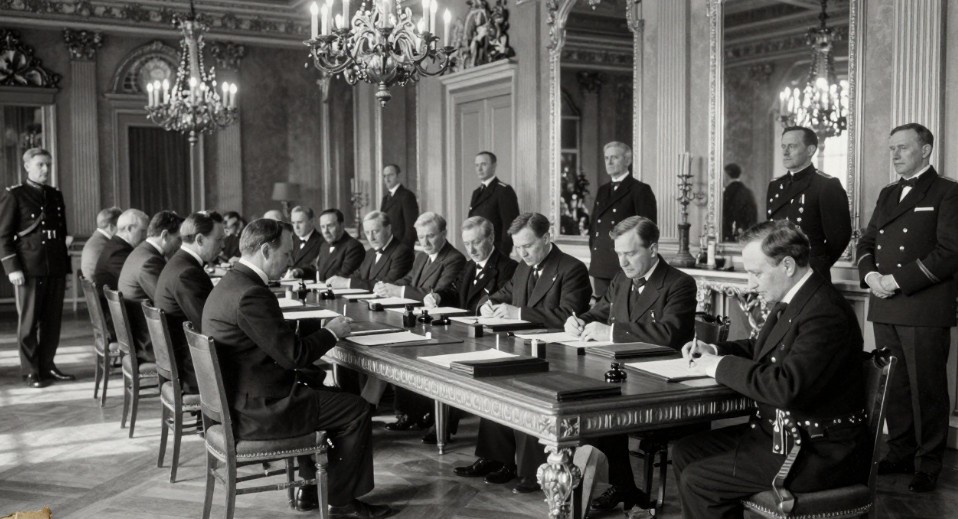
Treaty of Brest-Litovsk — March 3, 1918
officially ended Russia’s participation in World War I.
For Germany, it seemed like the perfect opportunity.
Thousands of troops could now be transferred from the Eastern Front to the Western Front for a final offensive against the Allies.
However, behind this apparent advantage, the German military machine was already beginning to collapse.
The Central Powers at Their Moment of Strength
Russia Leaves the War
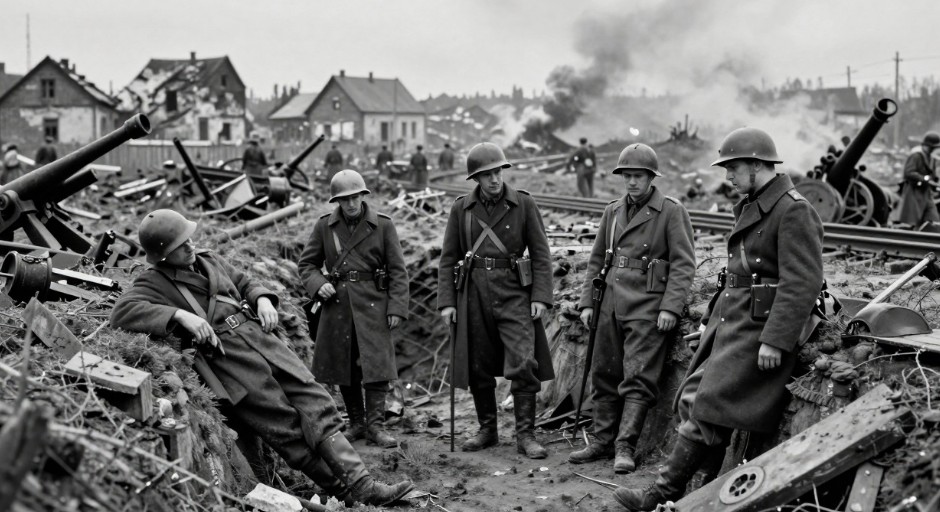
The end of the Eastern Front gave Germany temporary strategic advantages.
The Central Powers achieved several important gains:
- Russian forces withdrew from the conflict.
- Germany gained influence over Eastern Europe.
- Ukraine came under German control.
- Romania was forced to surrender.
On May 7, 1918, the:
Treaty of Bucharest
confirmed Romania’s defeat and strengthened German influence in the region.
For a brief moment, Berlin believed victory was within reach.
The German High Command planned a massive offensive designed to defeat the Allies before American forces could arrive in full strength.
The German Army’s Hidden Crisis
A Powerful Army Losing Its Strength
Although Germany still possessed one of the most powerful armies in the world, the reality inside its ranks was increasingly desperate.
Between March and July 1918, Germany lost approximately:
950,000 soldiers.
These losses included:
- Dead soldiers.
- Wounded troops.
- Prisoners.
- Increasing numbers of deserters.
The problem went beyond battlefield casualties.
The German military estimated that between:
750,000 and 1 million soldiers
were absent without authorization or unable to continue fighting.
Around:
25% of soldiers
were abandoning their positions.
The army that appeared powerful on maps was slowly losing the will and ability to continue the war.
The Invisible Enemy: The Spanish Flu Pandemic
Disease Weakens the Front Lines
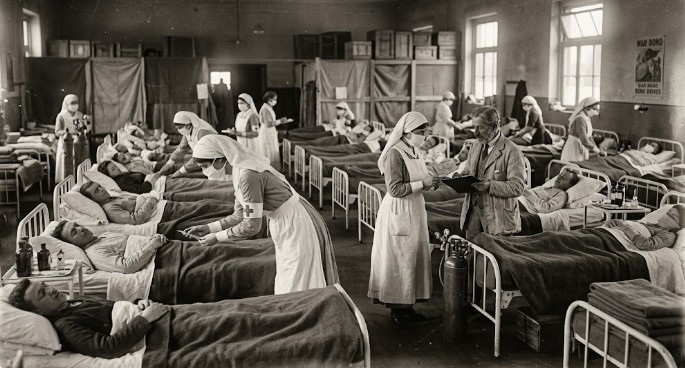
While armies fought across Europe, another enemy spread rapidly:
The Spanish Flu pandemic.
The disease affected soldiers living in overcrowded trenches, military camps, and transport areas.
Thousands of men became sick within weeks.
The consequences were severe:
- Units lost combat effectiveness.
- Medical systems became overwhelmed.
- Morale declined further.
- Exhausted soldiers questioned the purpose of continuing the war.
The pandemic arrived at the worst possible moment for Germany.
After four years of conflict, the army was already suffering from shortages, exhaustion, and declining public support.
Germany’s Last Offensive: The Spring Gamble of 1918
A Final Attempt to Win the War
With troops transferred from the Eastern Front, Germany launched a series of major offensives in early 1918.
The objective was clear:
- Break the Allied lines.
- Capture strategic territory.
- Defeat France and Britain before American forces became decisive.
Initially, German forces achieved some advances.
However, the offensive failed to produce the breakthrough Germany desperately needed.
The Allies absorbed the attacks and continued strengthening their positions.
The arrival of increasing numbers of American soldiers changed the balance of power.
August 8, 1918: The Day the German Army Collapsed
The Beginning of the End
On August 8, 1918, Allied forces launched a powerful offensive against German positions.
The attack, led mainly by British and French forces, produced devastating results.
German defenses collapsed quickly.
Approximately:
30,000 German soldiers surrendered without a fight.
The scale of the defeat shocked German commanders.
General:
Erich Ludendorff
described the day as:
“the black day of the German Army.”
For Ludendorff, the war was no longer realistically winnable.
The German military leadership understood that continuing the conflict could lead to complete destruction.
The Crisis Within German Leadership
Ludendorff and Hindenburg Recognize Defeat
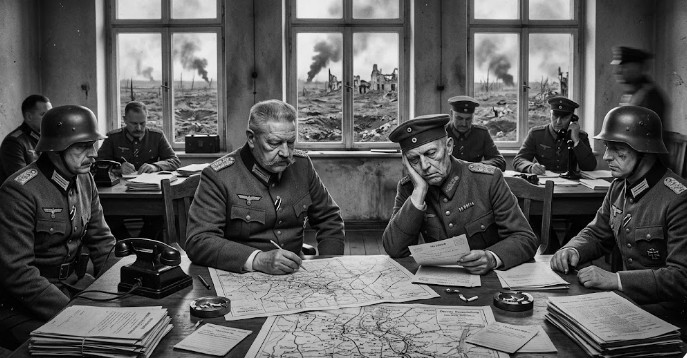
Ludendorff became convinced that Germany needed to seek an end to the war before the situation became catastrophic.
On August 14, 1918, he attempted to resign, although his request was rejected.
Field Marshal:
Paul von Hindenburg
also recognized that Germany’s military position was deteriorating beyond recovery.
The German Empire still had soldiers, weapons, and territory.
But the foundations of its war effort were collapsing:
- The army was exhausted.
- The economy was under extreme pressure.
- The population was suffering from shortages.
- The Allies were becoming stronger.
The war Germany believed it could win was becoming impossible to continue.
The Collapse of Germany’s Allies
Austria-Hungary Falls Apart
Germany was not collapsing alone.
Its allies were also facing severe crises.
The Austro-Hungarian Empire was breaking apart because of:
- Ethnic tensions.
- Political instability.
- Food shortages.
- Military defeats.
The empire that had existed for centuries was losing control over its own population.
The Ottoman Empire and Bulgaria
The Ottoman Empire was also weakening.
Its campaigns in the Caucasus and Middle East had exhausted its resources.
Military defeats and economic problems accelerated its decline.
Bulgaria, another member of the Central Powers, became increasingly isolated.
After years of fighting, Bulgarian forces were exhausted and demoralized.
By the end of September 1918, the Central Powers were no longer capable of maintaining a united war effort.