Maurice Genevoix: The Student Who Faced the Hell of Verdun — The Soul of World War I in the Trenches of the 106th Regiment
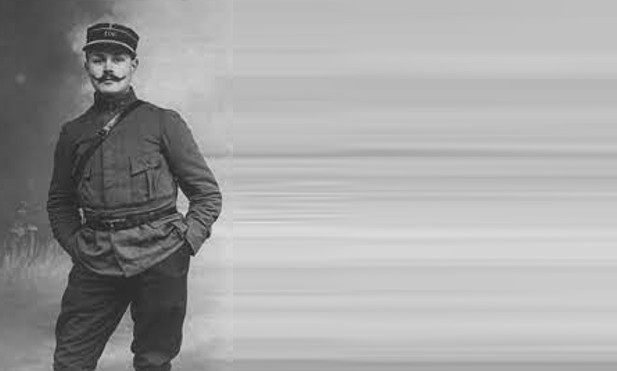
Maurice Genevoix was not born a soldier. Before the First World War transformed Europe into a battlefield, he was a promising young French student, deeply dedicated to literature, philosophy, and the study of human nature.
Like many young men of his generation, Genevoix imagined a future shaped by education, intellectual pursuits, and personal ambitions. He was interested in words because he believed literature had the power to reveal the deepest aspects of human experience.
But in 1914, everything changed.
When Europe descended into the chaos of the First World War, thousands of young men abandoned their ordinary lives and were drawn into a conflict unlike anything previously experienced. Universities emptied, factories shifted toward military production, and an entire generation was forced to exchange classrooms and professions for trenches and battlefields.
For Genevoix, the war was not a distant political event discussed in newspapers. It became a personal reality of mud, artillery, fear, exhaustion, and survival.
Still young and developing his own identity, he voluntarily enlisted in the French Army, joining thousands of other men who answered the call of national duty.
He was assigned to the 106th Infantry Regiment, a French military unit that would soon find itself at the center of some of the most intense fighting on the Western Front.
His experience would transform him from a student of literature into one of the most important witnesses of the human reality of World War I.
From Student to Soldier: Joining the 106th Infantry Regiment
A French Student Faces the Reality of War
Before 1914, Maurice Genevoix represented a generation that believed in progress, education, and the possibilities of modern society.
The outbreak of war shattered that sense of stability.
The First World War introduced a new type of conflict, where industrial technology combined with traditional military strategies to create unprecedented destruction. Soldiers were no longer fighting only against enemy armies; they were fighting against artillery barrages, machine guns, disease, starvation, and the psychological pressure of prolonged combat.
Genevoix entered this world with the perspective of a writer. Unlike many soldiers who focused only on survival, he also observed, remembered, and recorded the experiences around him.
This ability to document the human side of war would later become the foundation of his literary legacy.
The 106th Infantry Regiment
After enlisting, Genevoix was assigned to the 106th Infantry Regiment of the French Army, a unit responsible for important defensive missions during the early stages of the conflict.
The regiment was part of France’s massive military mobilization in 1914, when millions of reservists and active soldiers were called into service following Germany’s declaration of war.
The responsibilities of the 106th Infantry Regiment included:
- Defending strategic positions along the French frontier.
- Reinforcing threatened sectors of the Western Front.
- Holding defensive lines against German advances.
- Supporting major military operations.
For Genevoix and his fellow soldiers, the regiment was not simply a military formation. It became a community of men who shared extreme danger, uncertainty, and sacrifice.
Many of those friendships would later become central themes in his writings.
The Road Toward Verdun
Defending Mulhouse in Alsace
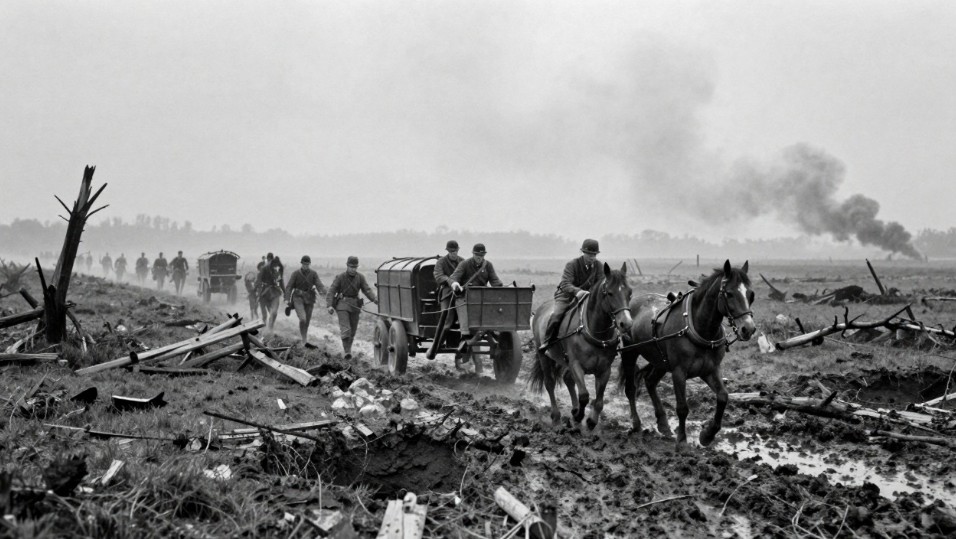
The first mission of the 106th Infantry Regiment was connected to the defense of Mulhouse, located in the Alsace region.
Alsace was one of the most sensitive territories in Europe before World War I. The region had changed hands between France and Germany following the Franco-Prussian War of 1870–1871, making it a symbol of national identity and historical rivalry.
When Germany defeated France in that conflict, France was forced to surrender Alsace and Lorraine to the newly established German Empire.
For nearly four decades, these territories remained under German control.
For France, Alsace and Lorraine represented more than lost land. They became symbols of national humiliation and the desire for restoration.
The region had both emotional and strategic importance because of:
- Its location between France and Germany.
- Its military significance as a border region.
- Its industrial resources.
- Its symbolic value for French national identity.
The 106th Regiment’s deployment to the area placed Genevoix directly into one of the most politically sensitive zones of the conflict.
From Alsace to the Defense of Verdun
The mission of the 106th Infantry Regiment soon became even more critical.
The regiment was transferred to reinforce the defenses around Verdun, one of the most important fortified areas on the Western Front.
Verdun was not simply another battlefield.
For France, Verdun represented a powerful defensive barrier against German invasion. Located near the eastern frontier, the city had been heavily fortified through a complex network of forts and military installations.
Its strategic importance came from several factors:
- Its position near the German border.
- Its role as a defensive gateway into France.
- Its symbolic importance as a protector of French territory.
- Its extensive military fortifications.
Although the infamous Battle of Verdun is most commonly associated with 1916, the region was already a crucial military objective from the beginning of the war.
In 1914, as Germany launched its opening offensives, Verdun became one of the places where French forces prepared to resist the German advance.
For Maurice Genevoix and the men of the 106th Regiment, the arrival at Verdun marked the moment when war stopped being an idea and became a daily struggle for survival.
The battlefield that awaited them would test not only their military strength but also their ability to endure conditions that few had ever imagined.
August 21, 1914: Verdun Awakens Under German Thunder
The First Days of War Reach Verdun
On the morning of August 21, 1914, the reality of modern warfare arrived at Verdun with devastating force.
Until that moment, many soldiers still carried ideas inherited from previous conflicts, imagining a war of movement, bravery, and decisive battles. However, the First World War quickly revealed a different reality: industrial warfare, where artillery, mass armies, and defensive positions could transform the battlefield into a landscape of destruction.
For Maurice Genevoix and the soldiers of the 106th Infantry Regiment, Verdun became the place where the romantic image of war disappeared forever.
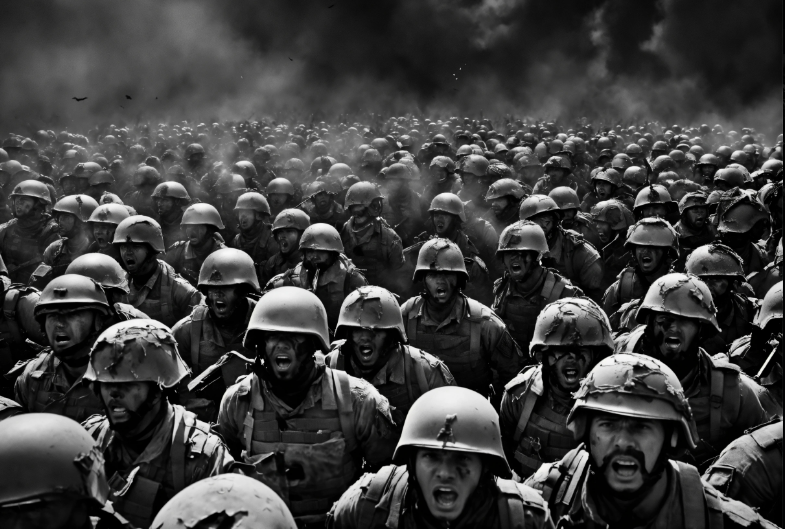
The German offensive began with overwhelming artillery power. Heavy guns positioned behind the front lines unleashed a massive bombardment against French positions, turning the surrounding landscape into a scene of fire, smoke, and devastation.
The attack was not simply designed to destroy physical defenses. It aimed to break the psychological resistance of French soldiers before infantry forces advanced.
The Power of German Artillery
The German Army entered World War I with one of the most advanced artillery systems in Europe.
Industrial production allowed Germany to manufacture powerful weapons capable of striking enemy positions from long distances.
Among the advantages of German artillery were:
- Large-caliber guns capable of destroying defensive positions.
- High volumes of ammunition production.
- Efficient coordination between artillery and infantry.
- Improved military planning based on industrial logistics.
The bombardment around Verdun demonstrated a new reality of warfare: soldiers could be killed without ever seeing the enemy.
For Genevoix, who had previously experienced violence only through books and imagination, the battlefield became an overwhelming sensory experience.
The sound of explosions, the shaking ground, and the constant presence of death created a world completely different from anything he had known before.
The Battlefield Becomes a Living Hell
The Destruction of the Trenches
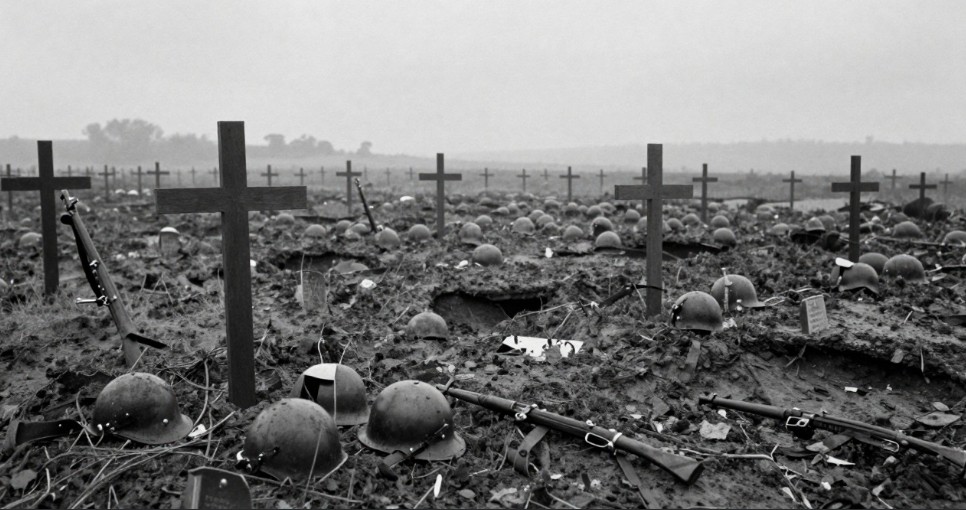
The first artillery strikes devastated French defensive positions.
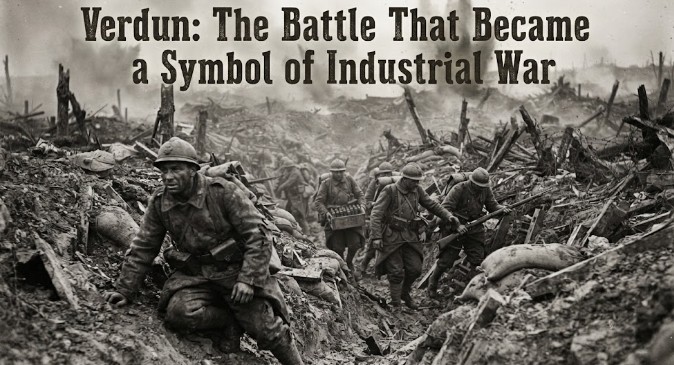
The trenches, which were supposed to provide protection, became extremely dangerous places. Explosions destroyed shelters, buried soldiers alive, and created enormous craters across the battlefield.
Genevoix witnessed the transformation of the landscape around him.
The ground itself seemed to disappear beneath constant bombardment. Smoke, dust, and gunpowder filled the air, making breathing difficult and visibility almost impossible.
The battlefield became a combination of:
- Destroyed trenches.
- Broken weapons.
- Abandoned equipment.
- Injured soldiers waiting for help.
- Dead animals and men buried in the mud.
The violence of industrial warfare created destruction on a scale that previous generations had never experienced.
Genevoix’s First Encounter With the Reality of War
Maurice Genevoix described these moments as an experience that felt like “a prolonged end of the world.”
For him, the greatest shock was not only the physical destruction but the psychological impact.
The constant artillery fire created an atmosphere where soldiers never knew when the next explosion would arrive.
There was no true safety.
Even inside defensive positions, men remained vulnerable to shells that could destroy entire sections of trenches within seconds.
The battlefield produced a unique form of fear:
- The fear of unseen enemies.
- The anxiety of waiting for the next bombardment.
- The exhaustion caused by constant danger.
- The uncertainty of whether survival would last another day.
Genevoix later used his writing to preserve these experiences, not only as a record of military events but as a testimony of what ordinary soldiers endured.
The German Infantry Advance
From the Smoke Came the Attack
The artillery bombardment was only the beginning.
After weakening French defensive positions, German infantry forces advanced through the smoke and destruction toward French lines.
Thousands of soldiers moved across damaged terrain, following the traditional objective of capturing strategic positions.
The battlefield, however, had already changed.
The open advances that characterized earlier nineteenth-century wars became increasingly difficult under the power of modern weapons.
Machine guns, artillery, and fortified positions made every movement extremely dangerous.
Despite the destruction surrounding them, the soldiers of the 106th Infantry Regiment refused to abandon their positions.
The Resistance of the 106th Infantry Regiment
The men of the 106th Regiment faced a situation that tested every aspect of human endurance.
They were not fighting only for a military objective. For many French soldiers, defending Verdun represented the protection of national territory and the survival of France itself.
Genevoix and his comrades fought under extreme conditions:
- Continuous enemy fire.
- Lack of sleep and exhaustion.
- Limited supplies.
- Constant uncertainty.
- The loss of friends and fellow soldiers.
Their resistance became part of the larger story of French determination during the opening stages of the war.
For Genevoix, the men around him were not anonymous soldiers. They were individuals with families, memories, fears, and hopes.
This human perspective would later distinguish his writings from traditional military histories.
The Human Cost Behind the Numbers
Beyond Strategy and Armies
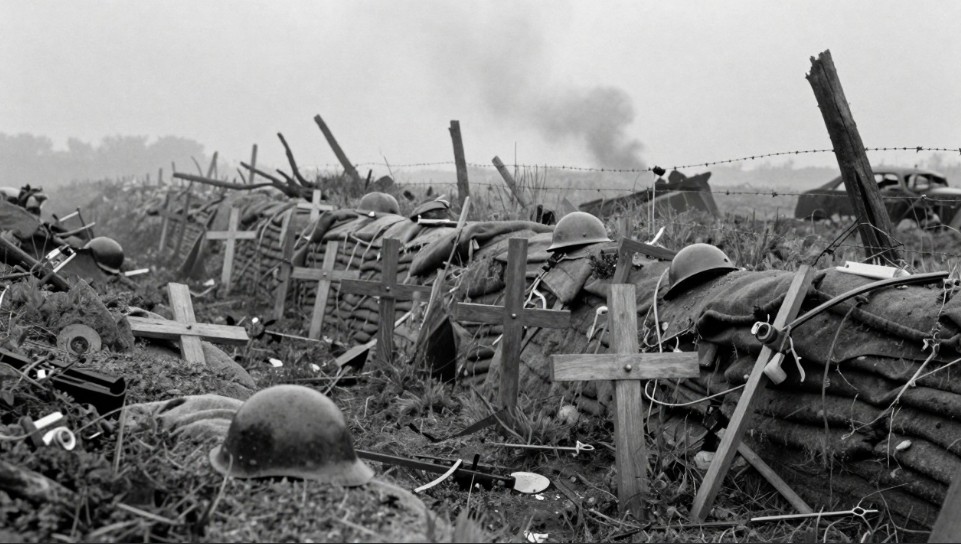
The opening battles of World War I are often described through military movements, commanders, and strategic decisions.
However, Genevoix’s testimony focused on another dimension: the experience of the ordinary soldier.
Behind every regiment and every military operation were thousands of individual lives affected by the conflict.
The soldiers of 1914 faced conditions that challenged the limits of human endurance.
They experienced:
- Separation from families.
- Constant exposure to death.
- Physical exhaustion.
- Emotional trauma.
- The disappearance of normal civilian life.
Through his later writings, Genevoix would ensure that these men were remembered not as statistics, but as human beings who endured one of the darkest periods of modern history.