
Mahatma Gandhi: The Architectural Force Behind Nonviolence and Global Liberty
The history of the 20th century is often written in the ink of gunpowder and blood. Yet, standing amidst the chaos of colonial expansion and world wars was a man clad in a simple loincloth, wielding nothing but the power of truth. Mahatma Gandhi was not just the father of a nation; he was the architect of a revolutionary philosophy that proved a focused mind could topple an empire without firing a single shot.
In this comprehensive guide, we explore the life, the struggles, and the enduring psychological warfare of peace that Gandhi used to liberate 350 million people.
🏛️ Origins and Early Life: The Making of a Moral Giant
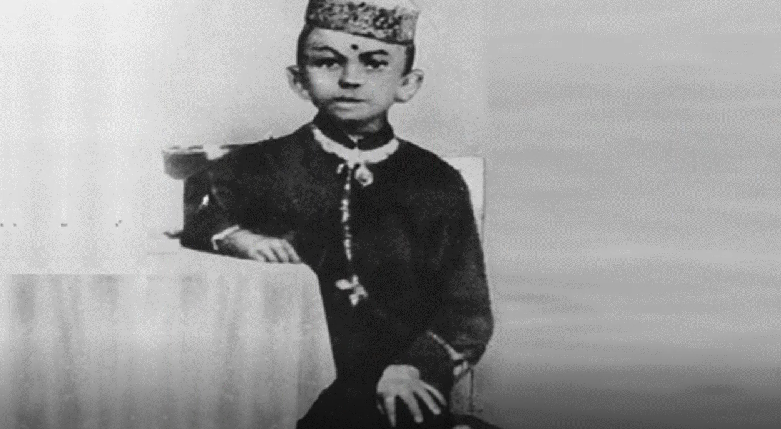
Mohandas Karamchand Gandhi was born on October 2, 1869, in the coastal town of Porbandar, Gujarat. Unlike many revolutionary leaders of his time, Gandhi did not belong to the elite Brahmin priestly class. He was born into the Vaishya caste, traditionally associated with merchants and commerce.
His childhood was characterized by a quiet, almost timid nature. He was an average student, yet he possessed an uncommon trait: an iron-clad sense of ethical responsibility. Even as a young boy, he struggled with the concept of “truth,” once confessing to his father about a minor theft because the weight of the lie was heavier than the fear of punishment. This early internal compass would later evolve into his world-changing doctrine of Satya (Truth).
At a young age, he married Kasturba Gandhi in an arranged marriage. This partnership, while traditional in its inception, would become a pillar of his life, as Kasturba eventually became a vital activist in her own right, standing by his side through decades of imprisonment and fasting.
🎓 Education in London: The Intellectual Awakening
In 1888, at the age of 18, Gandhi sailed for London to study law at University College London. This period was a profound cultural shock. To fit into British society, Gandhi initially tried to transform himself into an “English Gentleman.” He took dancing lessons, bought expensive suits, and tried to refine his accent.
The Conflict of Two Worlds
However, this Western veneer soon cracked under the weight of his spiritual roots. While in London, Gandhi joined the Vegetarian Society, which introduced him to a community of intellectuals who viewed meat-eating not just as a dietary choice, but as a moral one.
During this time, he had a spiritual epiphany through literature. Ironically, it was in London that he truly discovered the Bhagavad Gita. He began to synthesize the Sermon on the Mount from the Bible with the Hindu concepts of detachment. He realized that true power did not lie in external mimicry of the oppressor, but in the internal mastery of the self.
🚂 The South African Crucible: 21 Years of Transformation
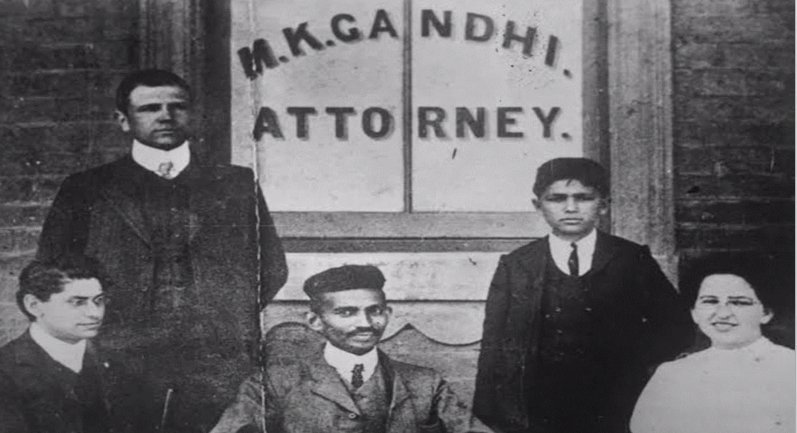
If London gave Gandhi his education, South Africa gave him his mission. In 1893, Gandhi accepted a legal contract in South Africa, a land then gripped by the suffocating laws of British colonial rule and racial segregation.
The Pietermaritzburg Incident
The turning point occurred at the Pietermaritzburg railway station. Despite holding a valid first-class ticket, Gandhi was ordered to move to the van compartment because of his race. When he refused, he was forcibly thrown off the train.
“I began to think of my duty. Should I fight for my rights or go back to India? … The hardship to which I was subjected was only a symptom of the deep disease of color prejudice.” — Mahatma Gandhi.
🧂 The Salt March: 385 Kilometers That Shook an Empire
In 1930, the British controlled the production and sale of salt—a basic human necessity. They taxed it heavily, making it a burden for the poorest Indians. Gandhi saw this as the perfect symbol of colonial injustice.
Key Facts of the Dandi March:
-
Total Distance: A grueling 385 km (240 miles) journey on foot.
-
Duration: 24 days of constant mobilization and speeches.
-
Initial Core: Started with 78 trusted followers from Sabarmati Ashram.
-
Mass Participation: Swelled into a human sea of thousands as they reached the coast.
-
The Aftermath: Resulted in the arrest of approximately 60,000 people, including Gandhi himself.
On the shores of Dandi, Gandhi picked up a lump of natural salt, technically committing a crime. This simple act sparked a nationwide firestorm. Across India, millions began making their own salt. The world watched as peaceful protestors were beaten without raising a hand in defense, revealing the inherent violence of colonial rule.
⚔️ Major Campaigns and Tactics of Satyagraha
Gandhi’s strategy was multifaceted. He didn’t just protest; he built an alternative economy.
-
The Non-Cooperation Movement (1920s): A massive boycott of British schools, courts, and consumer goods.
-
The Khadi Movement: Promoting the spinning wheel (Charkha) to break the British textile monopoly and empower local weavers.
-
Dharasana Satyagraha: A peaceful raid on salt works where hundreds were beaten by police, garnering international sympathy.
-
Political Fasting: Using hunger strikes as a “moral surgical strike” to stop communal riots and demand policy changes.
📊 Gandhi’s Strategic Profile at a Glance
To better understand his leadership, here is a breakdown of his political and social impact:
-
Primary Philosophy: Satyagraha (Truth-Force) and Ahimsa (Nonviolence).
-
Key Rivals: The British Raj and internal communal divisions.
-
Major Achievement: Leading India to full independence on August 15, 1947.
-
Social Reform: Challenging the caste system and advocating for the “Harijans” (Children of God).
-
Economic Strategy: Promoting Swadeshi (self-sufficiency) and local industry.
🌅 Independence, Partition, and the Ultimate Sacrifice
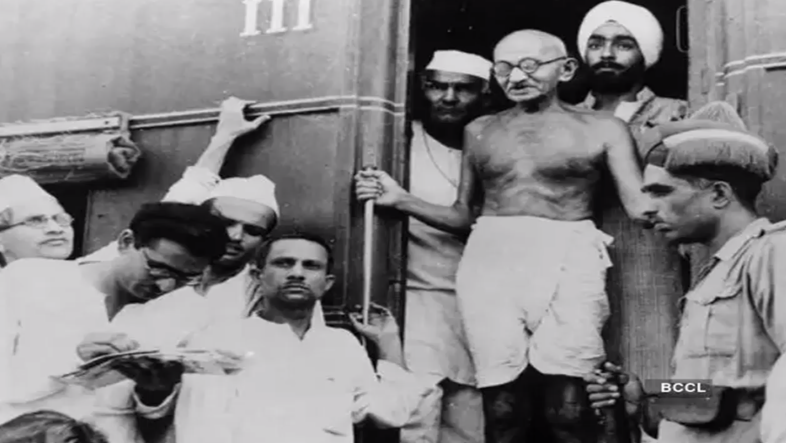
On August 15, 1947, India finally achieved independence. However, for Gandhi, it was a bittersweet victory. The country was partitioned into Hindu-majority India and Muslim-majority Pakistan, unleashing a wave of communal violence that killed nearly 1,000,000 people.
The Final Act
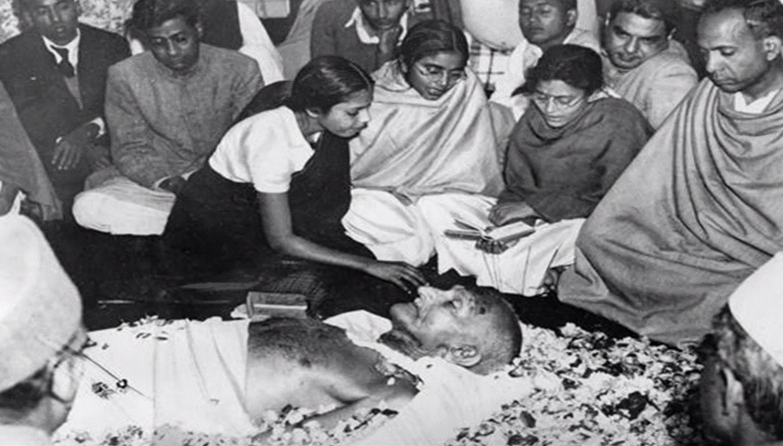
On January 30, 1948, while heading to a prayer meeting in New Delhi, Gandhi was assassinated by a Hindu extremist. His death shocked the world but solidified his message. He died as he lived: a man of peace caught in the crossfire of hatred.
🌎 Legacy: A Blueprint for Global Change
Mahatma Gandhi’s influence did not die in 1948. He provided a “user manual” for justice that has been utilized by every major civil rights movement since:
-
Martin Luther King Jr. (USA): Adopted Gandhian nonviolence to fight segregation.
-
Nelson Mandela (South Africa): Used these principles to dismantle Apartheid.
-
Modern Environmentalism: His views on simple living are the foundation of modern sustainability movements.
💡 Conclusion: The Mahatma in the Modern World
Gandhi showed us that the greatest weapon against an empire is not a sword, but a stubborn refusal to cooperate with injustice. In an era of increasing polarization, his message of dialogue, empathy, and nonviolence remains our most potent tool for change.
Hi there would you mind letting me know which hosting company you’re
using? I’ve loaded your blog in 3 completely different internet
browsers and I must say this blog loads a lot quicker then most.
Can you recommend a good internet hosting provider at a
reasonable price? Kudos, I appreciate it!
hostgator