
The Kennedy Family: History, Tragedies, Politics, and Legacy
The Kennedy family occupies a unique place in American history. For more than a century, the family name has been associated with politics, public service, wealth, ambition, and some of the most painful events in modern American life.
From Irish immigrant roots in Boston to the presidency of John F. Kennedy and the political career of Robert F. Kennedy, the Kennedy family became one of the most recognizable political families in the United States.
But the Kennedy story is about more than political power. It is also a story of immigration, social mobility, family expectations, public service, war, civil rights, and personal loss.
Understanding the Kennedy family history requires looking beyond the famous photographs and presidential speeches. Their rise took place over several generations, and their legacy was shaped as much by historical circumstances as by the decisions of individual family members.
The Kennedy Family’s Irish-American Roots
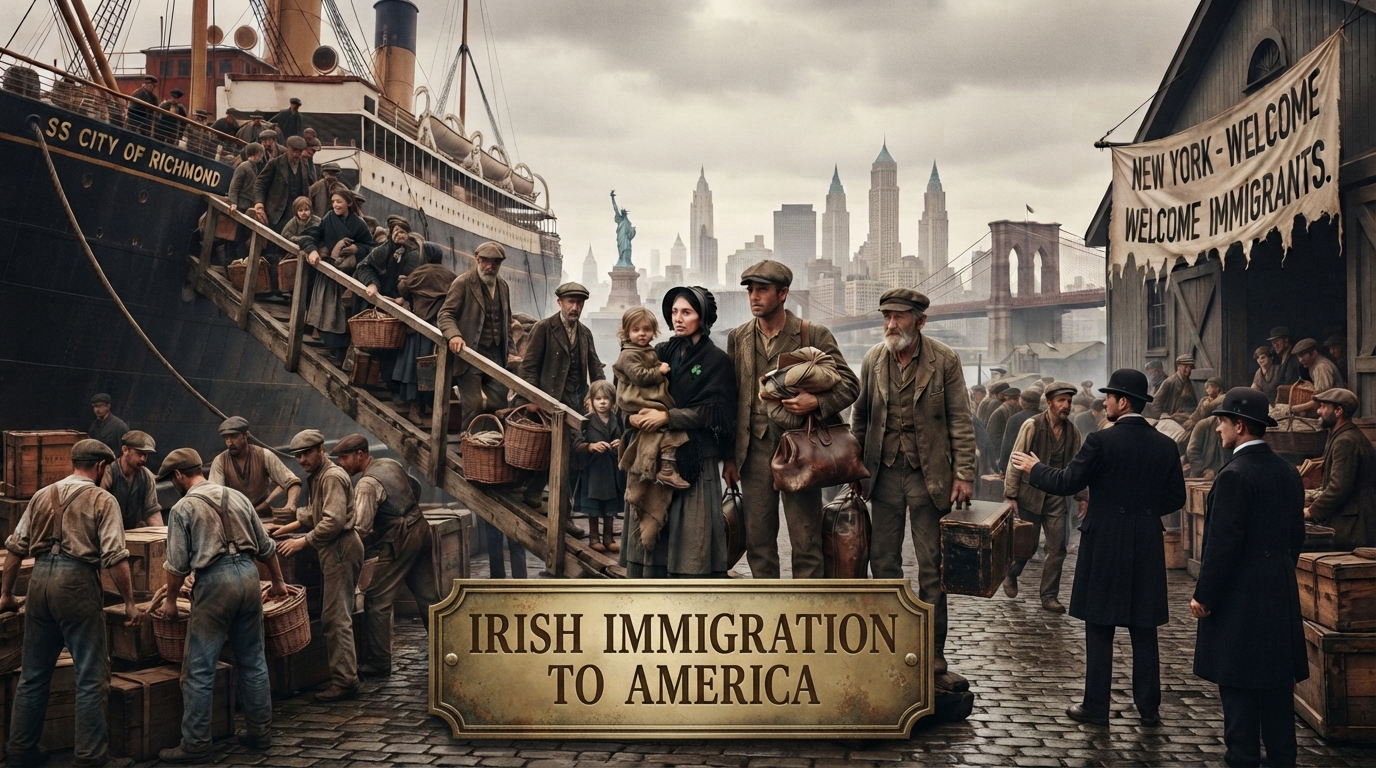
The Kennedy story in the United States began with Irish immigration during the 19th century.
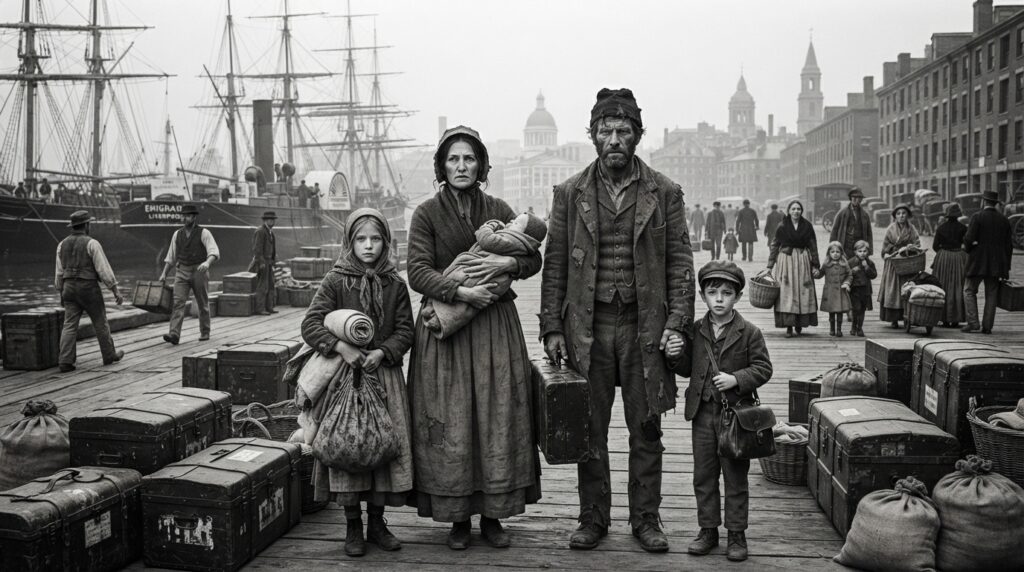
Patrick Kennedy, the great-grandfather of President John F. Kennedy, came from Ireland to Boston during a period when Irish immigrants faced poverty, discrimination, and difficult social conditions. The growth of the Irish-American community in Boston would eventually provide an important social and political environment for the Kennedy family’s rise.
The family’s progress did not happen overnight. Patrick Kennedy established himself in Boston, and subsequent generations expanded the family’s economic and political opportunities.
This gradual rise from immigrant roots to political prominence is an important part of the Kennedy family history. It also reflects the broader experience of many Irish-American families who became increasingly integrated into American political, business, and civic life during the late 19th and early 20th centuries.
Joseph P. Kennedy and the Beginning of a Political Dynasty
The next major figure in the family’s story was Joseph P. Kennedy Sr.
Born in Boston in 1888, Joseph Kennedy became a successful businessman and eventually one of the most influential members of the Kennedy family. He also entered public life and served as the United States ambassador to the United Kingdom from 1938 to 1940. Records from the John F. Kennedy Presidential Library document his diplomatic service during the years leading into World War II.
Joseph Kennedy and his wife, Rose Fitzgerald Kennedy, raised a large family. Their children were encouraged to pursue education, public service, and leadership.
The family’s political ambitions became particularly significant as Joseph Kennedy’s children entered different areas of American public life.
His eldest son, Joseph P. Kennedy Jr., was expected by his father to pursue a political career. Instead, his life ended during World War II when his aircraft exploded during a military mission in 1944.
His death changed the family’s future and placed greater attention on his younger brother, John F. Kennedy.
John F. Kennedy: From Senator to President
John Fitzgerald Kennedy, commonly known as JFK, became the most internationally recognized member of the Kennedy family.
After serving in the U.S. House of Representatives and later the Senate, Kennedy won the 1960 presidential election and became the 35th president of the United States.
His presidency lasted from January 1961 until his assassination in November 1963.
Kennedy’s public image was closely associated with youth, political renewal, public service, and the challenges of the Cold War. His administration faced major international events, including the Cuban Missile Crisis, while also confronting growing demands for civil rights at home.
His inaugural address became one of the most remembered presidential speeches in American history, particularly for its call for citizens to consider their responsibilities to their country.
John F. Kennedy and the Civil Rights Movement
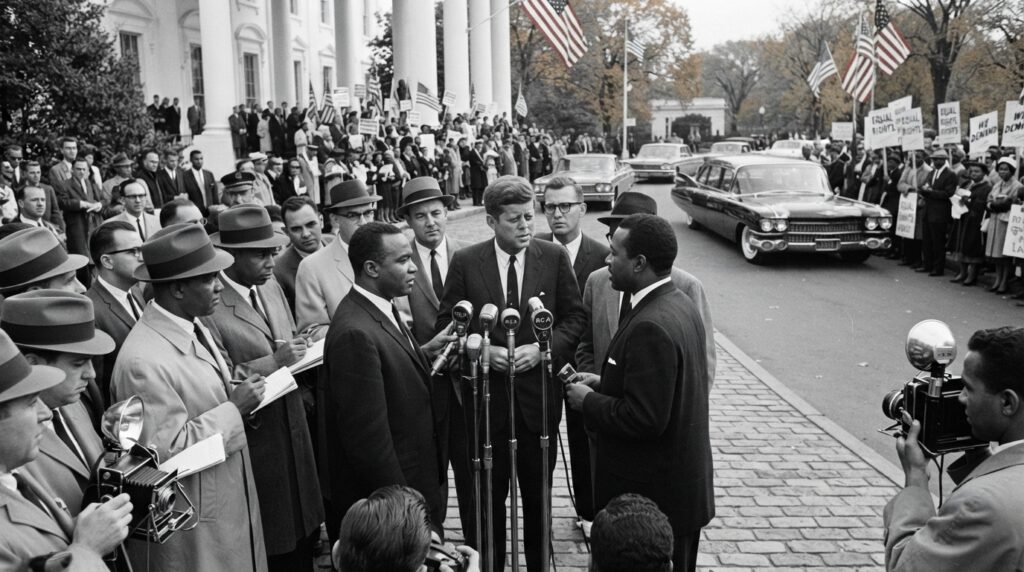
The relationship between John F. Kennedy and the American Civil Rights Movement is an important part of his historical record.
Kennedy’s administration initially approached civil rights cautiously, but pressure from civil rights activists and major events during 1963 contributed to a stronger federal response.
In June 1963, Kennedy delivered a nationally televised address describing civil rights as both a legal and moral issue. Shortly afterward, his administration submitted comprehensive civil rights legislation to Congress.
However, an important historical distinction is sometimes overlooked.
John F. Kennedy did not sign the Civil Rights Act of 1964. He was assassinated in November 1963, before the legislation became law. After his death, President Lyndon B. Johnson continued the legislative effort, and Congress passed the Civil Rights Act of 1964. Johnson signed it into law on July 2, 1964.
Kennedy’s role was therefore significant in proposing and supporting major civil rights legislation, while the final passage and signing occurred under the Johnson administration.
This distinction helps provide a more accurate understanding of the Kennedy family’s relationship with the civil rights movement.
The Cold War and the Cuban Missile Crisis
John F. Kennedy’s presidency was also defined by the Cold War, the global confrontation between the United States and the Soviet Union.
One of the most dangerous moments of the period came in October 1962, during the Cuban Missile Crisis.
The discovery of Soviet missiles in Cuba created the possibility of direct military confrontation between the world’s two nuclear superpowers. Kennedy’s administration ultimately reached an agreement with the Soviet Union, and the crisis ended without a direct nuclear conflict between the two countries.
The event became one of the defining moments of JFK’s presidency and remains an important subject for historians studying the Cold War.
The Assassination of John F. Kennedy
On November 22, 1963, John F. Kennedy was assassinated in Dallas, Texas, while traveling in a presidential motorcade.
His death shocked the United States and attracted worldwide attention.
Kennedy was only 46 years old.
The assassination also changed the trajectory of American politics. Vice President Lyndon B. Johnson succeeded him as president and later played a central role in passing major legislation, including the Civil Rights Act of 1964.
The assassination remains one of the most discussed events in American history, generating decades of investigations, books, documentaries, and public debate.
Robert F. Kennedy and a Different Political Path
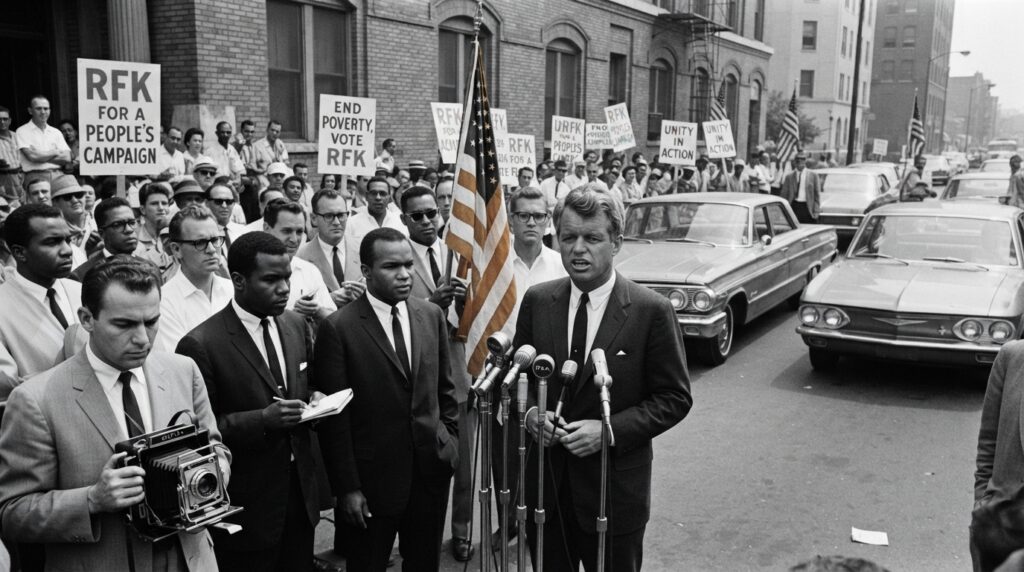
John F. Kennedy’s younger brother, Robert F. Kennedy, developed his own important political career.
Robert Kennedy served as attorney general during his brother’s presidency and later became a U.S. senator from New York. The U.S. Senate records show that he served in the Senate from January 3, 1965, until his death in June 1968.
His political interests included civil rights, poverty, organized crime, and social inequality.
As attorney general, Robert Kennedy became closely involved in the federal government’s response to civil rights issues. His later Senate career expanded his national profile.
In 1968, he entered the race for the Democratic presidential nomination.
After winning the California Democratic primary, Kennedy was shot at the Ambassador Hotel in Los Angeles on June 5, 1968. He died the following day. The U.S. Senate records his death on June 6, 1968.
His assassination came less than five years after the death of his brother John and became another defining tragedy in Kennedy family history.
The Kennedy Family’s Other Tragedies
The deaths of John and Robert Kennedy were not the only tragedies experienced by the family.
Joseph P. Kennedy Jr. died during World War II in 1944.
Kathleen “Kick” Kennedy, one of Joseph and Rose Kennedy’s daughters, died in a plane crash in France in 1948.
Decades later, John F. Kennedy Jr., the son of President John F. Kennedy, died in a plane crash off the coast of Massachusetts in 1999 along with his wife, Carolyn Bessette Kennedy, and her sister Lauren Bessette.
These events contributed to the public perception of the Kennedy family as a family marked by extraordinary personal losses.
However, it is important not to reduce the entire Kennedy story to tragedy. The family also produced generations of lawyers, diplomats, public officials, activists, educators, and other professionals.
Ted Kennedy and the Continuation of Public Service
Another major figure in the Kennedy political story was Edward M. “Ted” Kennedy, the youngest brother of John and Robert.
Ted Kennedy represented Massachusetts in the U.S. Senate for decades and became one of the longest-serving senators in American history.
His career helped maintain the Kennedy family’s presence in national politics long after the deaths of his older brothers.
Unlike John and Robert Kennedy, Ted Kennedy’s influence developed over many decades through legislative work rather than a presidential campaign cut short by tragedy.
His career is therefore an important reminder that the Kennedy political legacy extended well beyond the two brothers most often associated with the family.
The Kennedy Family in American History
Why has the Kennedy family remained so prominent in American culture?
Part of the answer is the extraordinary combination of politics, wealth, public visibility, and historical events surrounding the family.
The Kennedys became prominent during a period when television was transforming American politics. John F. Kennedy’s presidential campaign and administration benefited from the growing importance of television, while his youthful image and family attracted enormous public attention.
The family’s story also intersected with some of the most important issues of the 20th century:
-
Irish-American immigration and social mobility
-
World War II
-
the Cold War
-
the Cuban Missile Crisis
-
the Civil Rights Movement
-
poverty and social inequality
-
presidential politics
-
the changing role of television in American elections
For this reason, the Kennedy family can be studied not simply as a famous political family, but as a window into several major transformations in American history.
Are the Kennedys Still Involved in Politics?
The Kennedy name has continued to appear in American public life across later generations.
Members of the extended Kennedy family have worked in politics, diplomacy, law, philanthropy, and other areas of public service.
The family’s political influence, however, has changed over time. The era in which John, Robert, and Ted Kennedy simultaneously occupied major positions in national politics is part of American history rather than a permanent feature of the political system.
The Kennedy name nevertheless remains recognizable in discussions of American political families.
What Is the Legacy of the Kennedy Family?
The Kennedy legacy is complex.
For some historians, the family represents an important chapter in the development of modern American political culture. The careers of John F. Kennedy, Robert F. Kennedy, and Ted Kennedy affected national debates over foreign policy, civil rights, social programs, and public service.
At the same time, the family history includes political controversies, disagreements, personal difficulties, and tragedies.
A balanced understanding of the Kennedy dynasty therefore requires looking at both accomplishments and limitations rather than presenting the family as either perfect heroes or simply victims of tragedy.
Their historical importance comes from the combination of these different elements.
Frequently Asked Questions About the Kennedy Family
Who was the first Kennedy to become politically prominent in America?
Patrick Kennedy established the family’s roots in Boston after immigrating from Ireland. Later generations expanded the family’s economic and political influence, with Joseph P. Kennedy Sr. becoming an important businessman, diplomat, and political figure.
Who was John F. Kennedy?
John F. Kennedy was the 35th president of the United States. He served from 1961 until his assassination in Dallas on November 22, 1963.
Did John F. Kennedy pass the Civil Rights Act of 1964?
No. Kennedy proposed major civil rights legislation in 1963, but he was assassinated before the bill became law. President Lyndon B. Johnson signed the Civil Rights Act of 1964 on July 2, 1964.
Who was Robert F. Kennedy?
Robert F. Kennedy was John F. Kennedy’s younger brother. He served as U.S. attorney general and later as a senator from New York. He was campaigning for the Democratic presidential nomination when he was assassinated in June 1968.
Why is the Kennedy family famous?
The Kennedy family became famous because of its long involvement in American public life, including the presidency of John F. Kennedy, the political careers of Robert and Ted Kennedy, its Irish-American roots, and the extraordinary number of tragedies that affected several generations.
Final Thoughts
The history of the Kennedy family is much more than the story of one president.
It begins with Irish immigration and the gradual rise of a family in Boston. It continues through Joseph P. Kennedy’s business and diplomatic career, John F. Kennedy’s presidency, Robert F. Kennedy’s pursuit of national office, and Ted Kennedy’s decades in the U.S. Senate.
Along the way, the family experienced extraordinary achievements and devastating losses.
The Kennedy dynasty became intertwined with some of the defining events of 20th-century America: the Cold War, the Civil Rights Movement, presidential politics, and the changing relationship between politicians and the American public.
That combination explains why the Kennedy family continues to attract historical interest.
Their story is ultimately a reminder that political legacies are rarely simple. They are shaped by ambition, opportunity, historical circumstances, public service, controversy, and personal decisions—and their effects can continue long after the people themselves are gone.