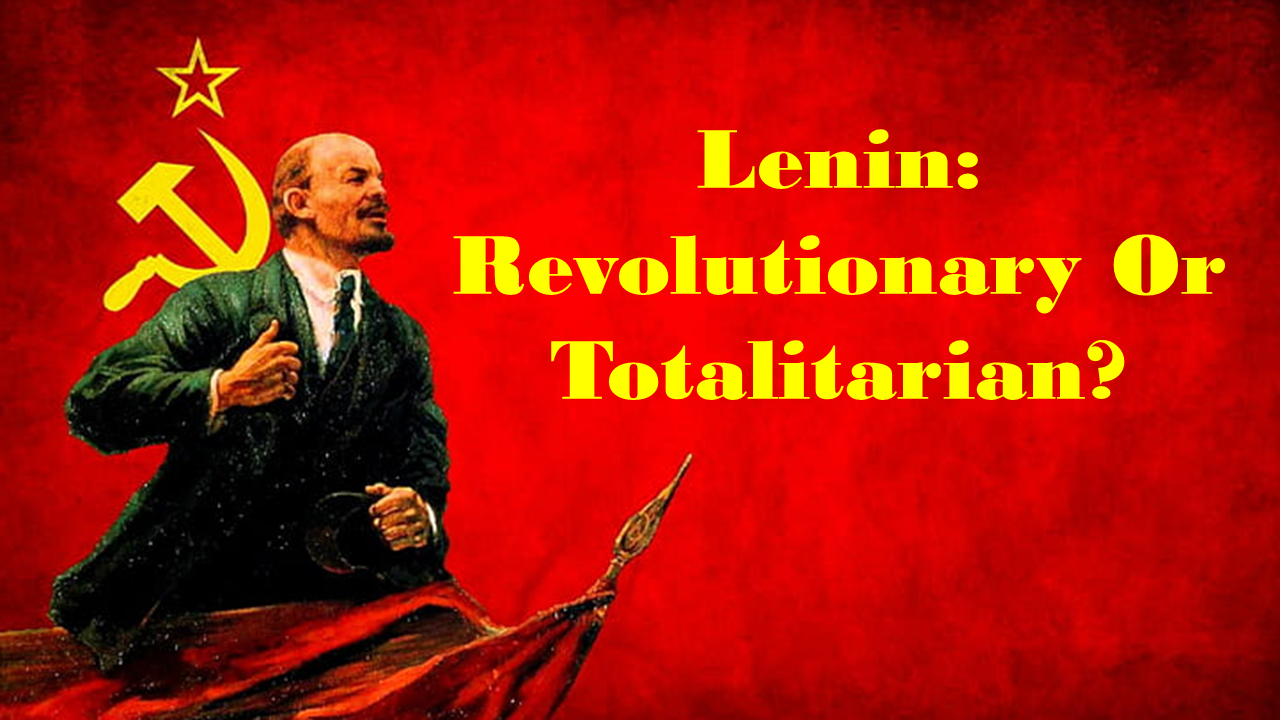
Lenin: Revolutionary Hero or Architect of Totalitarianism? Uncovering the True Legacy of the Russian Revolution’s Leader
Vladimir Ilyich Ulyanov, globally known as Lenin, remains one of the most controversial and influential political figures in modern history. More than a century after the Russian Revolution, debates surrounding his legacy continue to divide historians, political analysts, and the general public. Was Lenin a visionary revolutionary who fought against oppression and inequality, or was he the intellectual architect of a system that evolved into one of the most repressive regimes of the 20th century?
This in-depth article explores Lenin’s life, ideology, political strategies, and historical impact. By analyzing his rise to power, his leadership during the Russian Revolution, and the long-term consequences of his actions, we aim to answer a question that still resonates today: Was Lenin an idealist reformer—or a totalitarian in disguise?
1. Who Was Lenin? Understanding the Man Behind the Myth
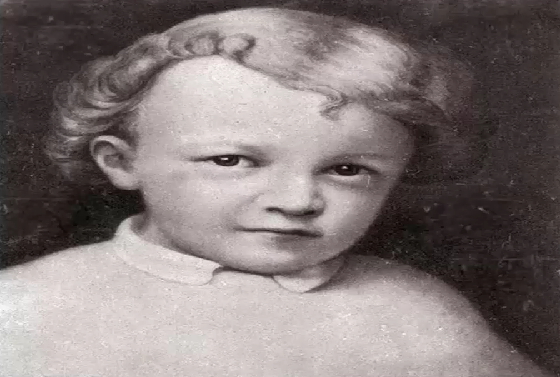
1.1 Early Life and Family Background
Vladimir Ilyich Ulyanov was born on April 22, 1870, in the city of Simbirsk, in the Russian Empire (now Ulyanovsk). He came from a relatively educated and stable middle-class family. His father was a school inspector, and his upbringing emphasized discipline, education, and civic duty.
Lenin showed exceptional intellectual ability from a young age, excelling in literature, philosophy, and classical studies. These early academic achievements laid the foundation for his later theoretical contributions to Marxism.
1.2 The Defining Tragedy: His Brother’s Execution
In 1887, Lenin’s life took a dramatic turn when his older brother, Alexander Ulyanov, was executed for participating in a plot to assassinate Tsar Alexander III. This event profoundly shaped Lenin’s worldview.
Rather than discouraging him, his brother’s execution radicalized Lenin. He became convinced that peaceful reform was impossible under the autocratic tsarist system and that only revolutionary action could bring meaningful change to Russia.
This moment marked the emotional and ideological birth of the revolutionary Lenin the world would later know.
2. Lenin’s Intellectual Formation and Marxist Ideology
2.1 Education, Law, and Revolutionary Thought
Lenin earned a law degree in 1891, but his true passion lay in political theory and revolutionary activism. He immersed himself in the works of Karl Marx and Friedrich Engels, adapting Marxism to Russia’s unique social and economic conditions.
Unlike Western Europe, Russia lacked a large industrial working class. Lenin believed that a highly disciplined revolutionary vanguard party was necessary to lead the proletariat and overthrow the ruling elite.
This reinterpretation of Marxism would later become known as Leninism.
2.2 Exile in Siberia and the Formation of a Revolutionary Network
In 1897, Lenin was arrested for subversive activities and sentenced to three years of exile in Siberia. While physically isolated, he remained intellectually active—writing, organizing, and planning.
During this period, he married Nadezhda Krupskaya, a fellow Marxist revolutionary who became his lifelong partner and collaborator.
3. The Road to Revolution: From Exile to Leadership
3.1 Life in Western Europe and Political Strategy
After his exile ended in 1900, Lenin lived in Germany, Switzerland, and England, where he edited revolutionary newspapers and strengthened connections among Russian socialist groups.
His primary goal was clear: organize a revolution capable of overthrowing the tsarist regime. He believed that ideological unity and strict party discipline were essential for success.
3.2 The Bolsheviks vs. Mensheviks: A Critical Split
In 1903, the Russian Social Democratic Labor Party split into two factions:
-
Bolsheviks, led by Lenin, advocating a centralized and disciplined revolutionary party
-
Mensheviks, led by Julius Martov, favoring broader democratic participation and gradual reform
This ideological division shaped the future of Russian socialism. Lenin’s uncompromising approach ultimately proved more effective in seizing power.
4. The Russian Revolution of 1917
4.1 Collapse of the Tsarist Regime
The strain of World War I, economic collapse, food shortages, and mass dissatisfaction weakened the Russian Empire. In early 1917, Tsar Nicholas II abdicated, leading to the establishment of a Provisional Government.
However, this government failed to address core issues such as land reform, hunger, and Russia’s continued participation in the war.
4.2 “Peace, Land, and Bread”: Lenin’s Winning Formula
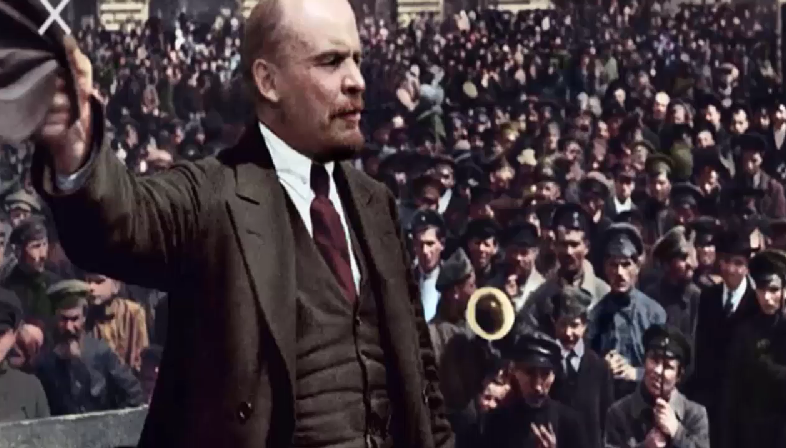
Returning to Russia in April 1917, Lenin presented his famous April Theses, calling for:
-
Immediate withdrawal from World War I
-
Redistribution of land to peasants
-
Transfer of power to workers’ councils (Soviets)
By October 1917, the Bolsheviks successfully seized power in a relatively bloodless coup, marking the beginning of the Russian Revolution.
📌 Image suggestion:
Iconic image of the Storming of the Winter Palace.
Best placement: After this subsection.
5. Governing the New Soviet State
5.1 Suppression of Opposition and Press Control
Once in power, Lenin moved swiftly to consolidate authority. Opposition parties were banned, independent newspapers shut down, and political dissent criminalized.
While Lenin believed these measures were temporary, critics argue they established the foundation for authoritarian governance.
5.2 Intellectuals, Academics, and Cultural Control
Lenin supported intellectuals only if they aligned with Bolshevik ideology. Professors, writers, and philosophers who opposed the regime were censored, exiled, or persecuted.
This period marked the beginning of state-controlled education and media—key features of later Soviet governance.
6. Civil War and the Path Toward Totalitarianism
6.1 The Russian Civil War (1918–1921)
Following the revolution, Russia plunged into a brutal civil war between the Red Army (Bolsheviks) and the White Army (anti-communist forces).
To survive, Lenin authorized extreme measures, including:
-
Forced grain requisitions
-
Political repression
-
Creation of the Cheka, the secret police
These actions, though justified as necessary for survival, intensified state control over society.
6.2 Defining Totalitarianism
Totalitarianism is characterized by:
-
Absolute state control
-
One-party rule
-
Censorship and propaganda
-
Suppression of dissent
-
Cult of leadership
Although Lenin did not establish a fully totalitarian state, many of these elements emerged during his rule.
7. Lenin vs. Stalin: Continuity or Betrayal?
After Lenin’s death in 1924, Joseph Stalin rose to power, transforming the Soviet Union into a brutal dictatorship marked by mass purges, labor camps (Gulags), and widespread terror.
Historians remain divided:
-
Some argue Stalin betrayed Lenin’s original vision
-
Others believe Stalin merely expanded a system Lenin created
Lenin himself expressed concerns about Stalin’s growing power shortly before his death.
8. Key Moments in Lenin’s Life: A Timeline
-
1870: Born in Simbirsk
-
1887: Brother executed
-
1891: Graduates in law
-
1897: Exiled to Siberia
-
1900: Leaves Russia
-
1917: Leads Bolshevik Revolution
-
1922: Suffers stroke; USSR founded
-
1924: Dies near Moscow
9. Conclusion: Revolutionary Visionary or Authoritarian Pioneer?
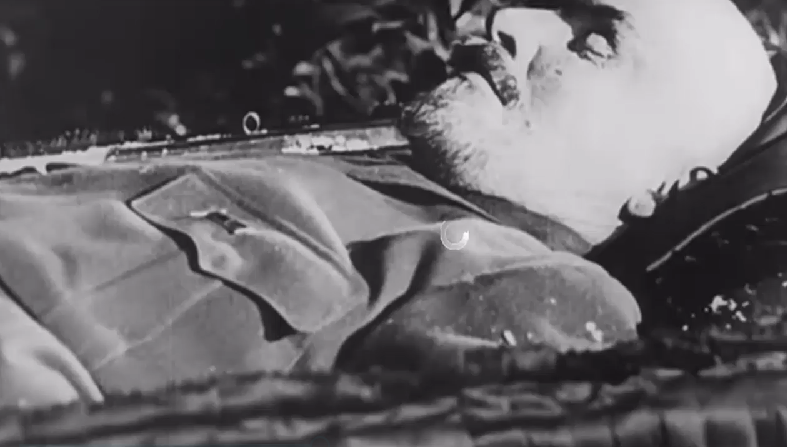
Lenin was neither a simple hero nor a one-dimensional villain. He was a complex political strategist, driven by ideology, ambition, and a belief that radical action was necessary to reshape society.
His leadership ended centuries of tsarist rule and inspired revolutionary movements worldwide. Yet, the system he created also normalized repression, censorship, and centralized power—elements that later evolved into one of history’s most oppressive regimes.
Understanding Lenin is essential for anyone seeking to comprehend modern communism, political revolutions, and the dangers of unchecked power. His legacy serves both as a lesson in revolutionary ambition and a warning about the fragile line between liberation and authoritarianism.